Creating Invisible Peace of Mind: Redesigning Fire Safety Equipment to Combine Safety, Convenience, and Aesthetics
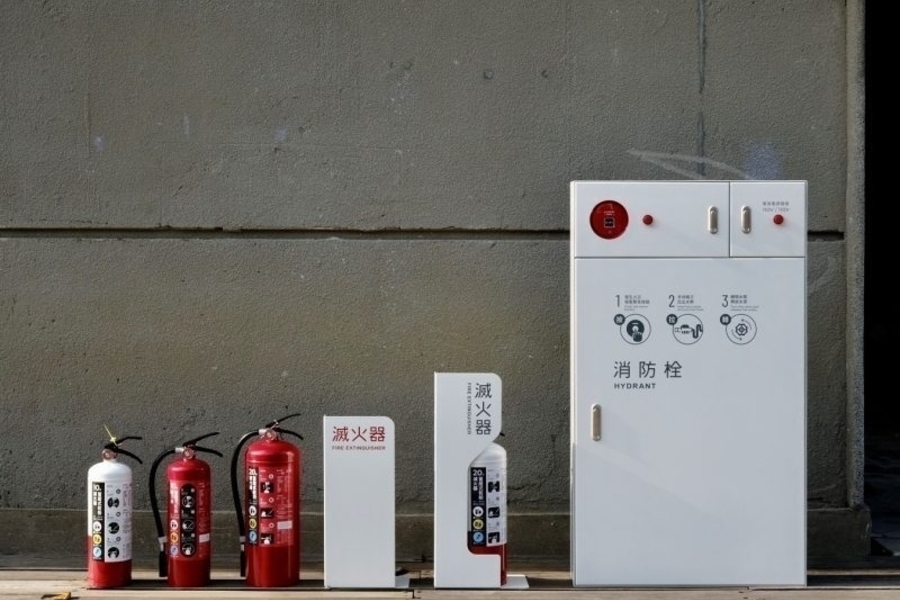
At the beginning of this year, the Taiwan Design Research Institute (TDRI) partnered with the National Fire Agency (NFA), Ministry of the Interior, on an interministerial initiative focusing on public fire safety equipment. As relatively few projects in Taiwan have applied design to improve such equipment, TDRI assembled an interdisciplinary team and invited relevant organizations to participate. The aim was to improve existing equipment and develop demonstration designs for future reference, while ensuring that fire safety remained the foremost priority.
A First-of-Its-Kind Cross-Agency and Cross-Organizational Co-Creation Initiative
Jointly convened by TDRI and the NFA, the team brought together representatives from the Taiwan Fire Protection Safety Center Foundation, the Taiwan Fire Equipment Industry Association, fire safety equipment manufacturers, and other relevant organizations. Professionals from a range of design disciplines also participated in the co-creation process, including Emil Chao, President of the Chinese Society of Interior Designers, as project advisor; Yu Feng of IF OFFICE as visual design director; and Pili Wu of PiliWu-Design as product design director.
Through the introduction of design, the team reorganized the information presented on fire safety equipment to establish a clearer visual hierarchy. The project also sought to improve existing equipment so that it could integrate more naturally into everyday environments. Through these demonstration designs, the team hopes to help drive the upgrading of Taiwan’s fire safety equipment industry.
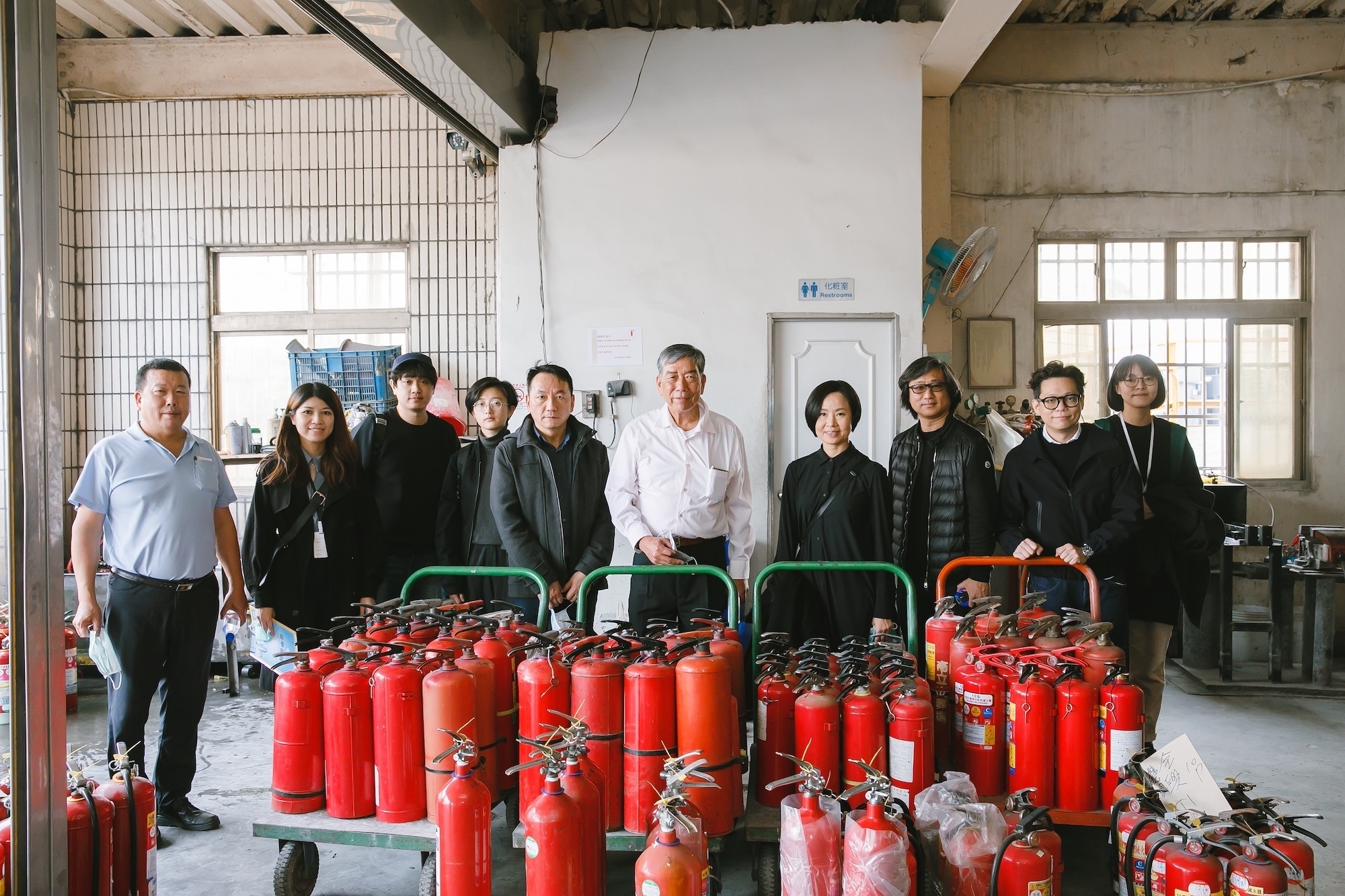 ▲ Field research.
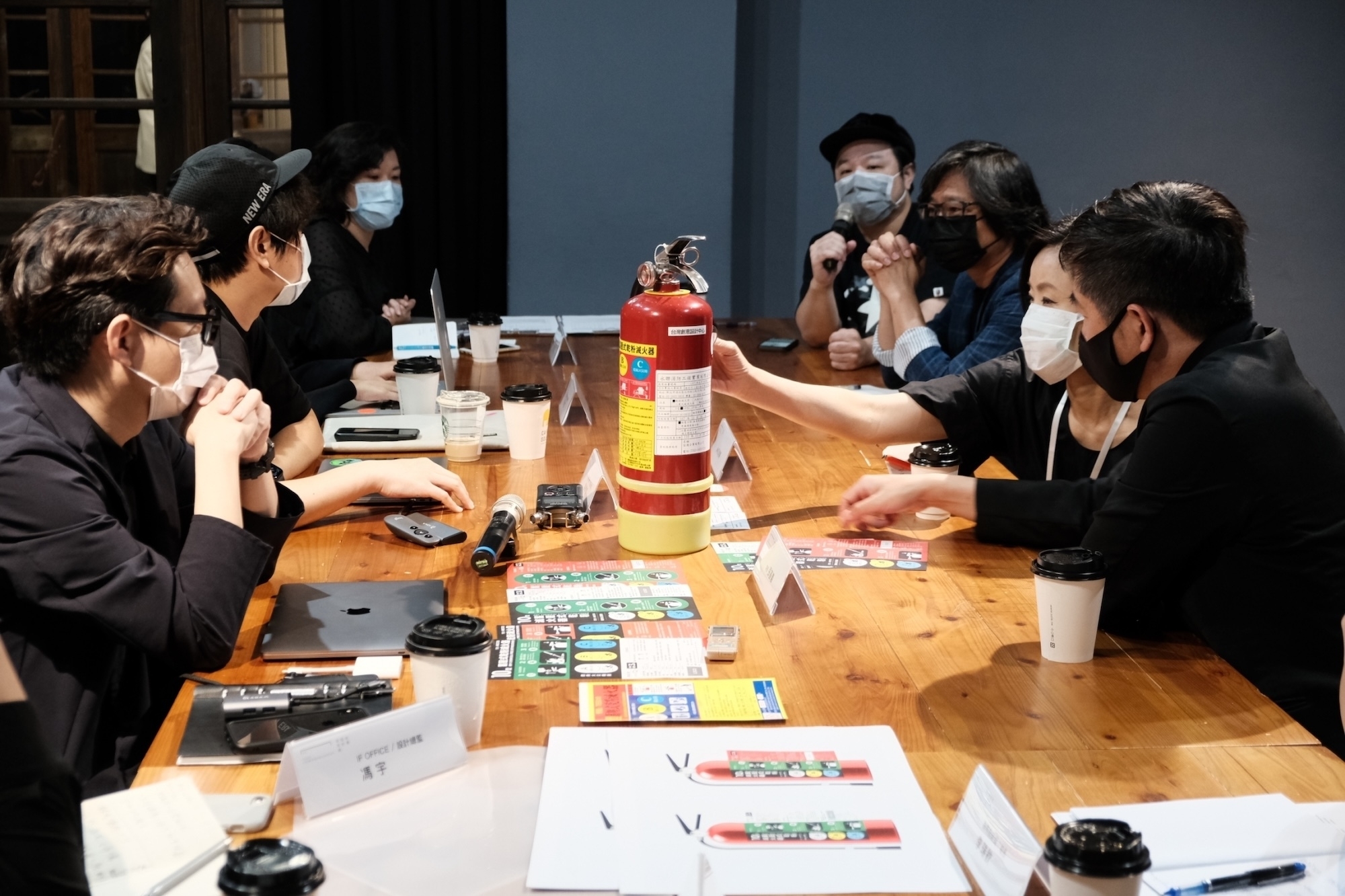 ▲ Representatives from different disciplines and organizations take part in a co-creation discussion.
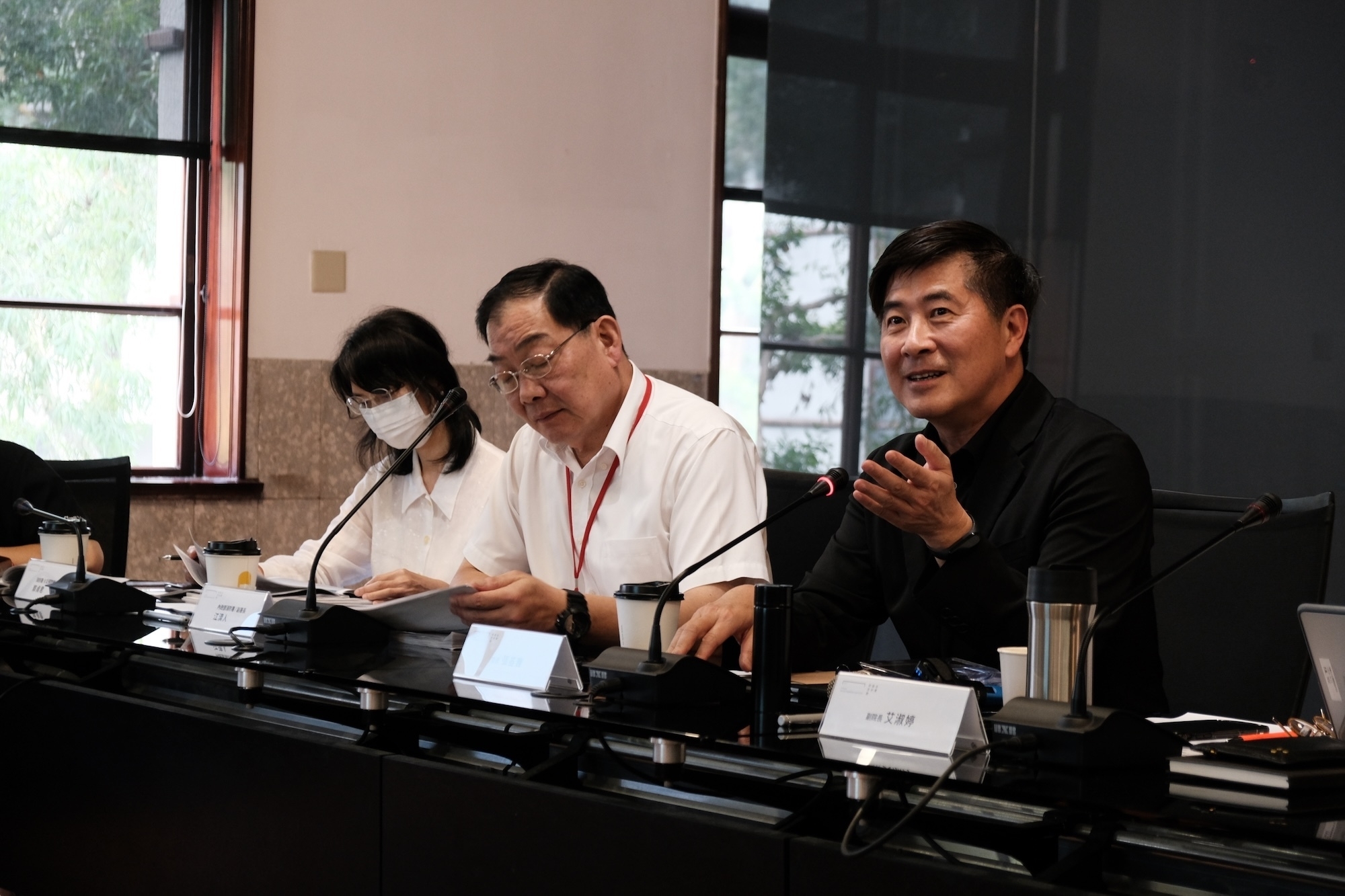 ▲ The National Fire Agency and TDRI join forces in co-creation. Center: NFA Deputy Director-General Chiang Chi-jen; right: TDRI President Chi-Yi Chang.
Eight Months of Research and Planning: Transforming Industrial Products into Everyday Objects
Over the course of eight months, the team conducted field research, design discussions, cross-organizational working meetings, design reviews, prototype production, regulatory discussions, design revisions, and the preparation of a demonstration design specification manual.
The project focused on two types of equipment: fire extinguishers in public spaces and indoor fire hydrant cabinets. Improvements to public fire extinguishers included information design, identification signs, wall-mounted brackets integrated with the signs, moisture-resistant stands, and color recommendations with application examples. Improvements to indoor fire hydrant cabinets included graphic and instructional information design, modular cabinet dimensions, refined construction details, and color recommendations with application examples.
Because fire safety equipment directly affects public safety, it is subject to strict regulations in Taiwan. Nevertheless, as long as safety is not compromised, there remains room for thoughtful design. The project therefore included an analysis of relevant regulations and drew upon international codes and standards to keep pace with current developments. The team also examined the challenges facing Taiwan’s fire safety equipment industry, identified opportunities for design intervention, and proposed practical solutions suited to current conditions.
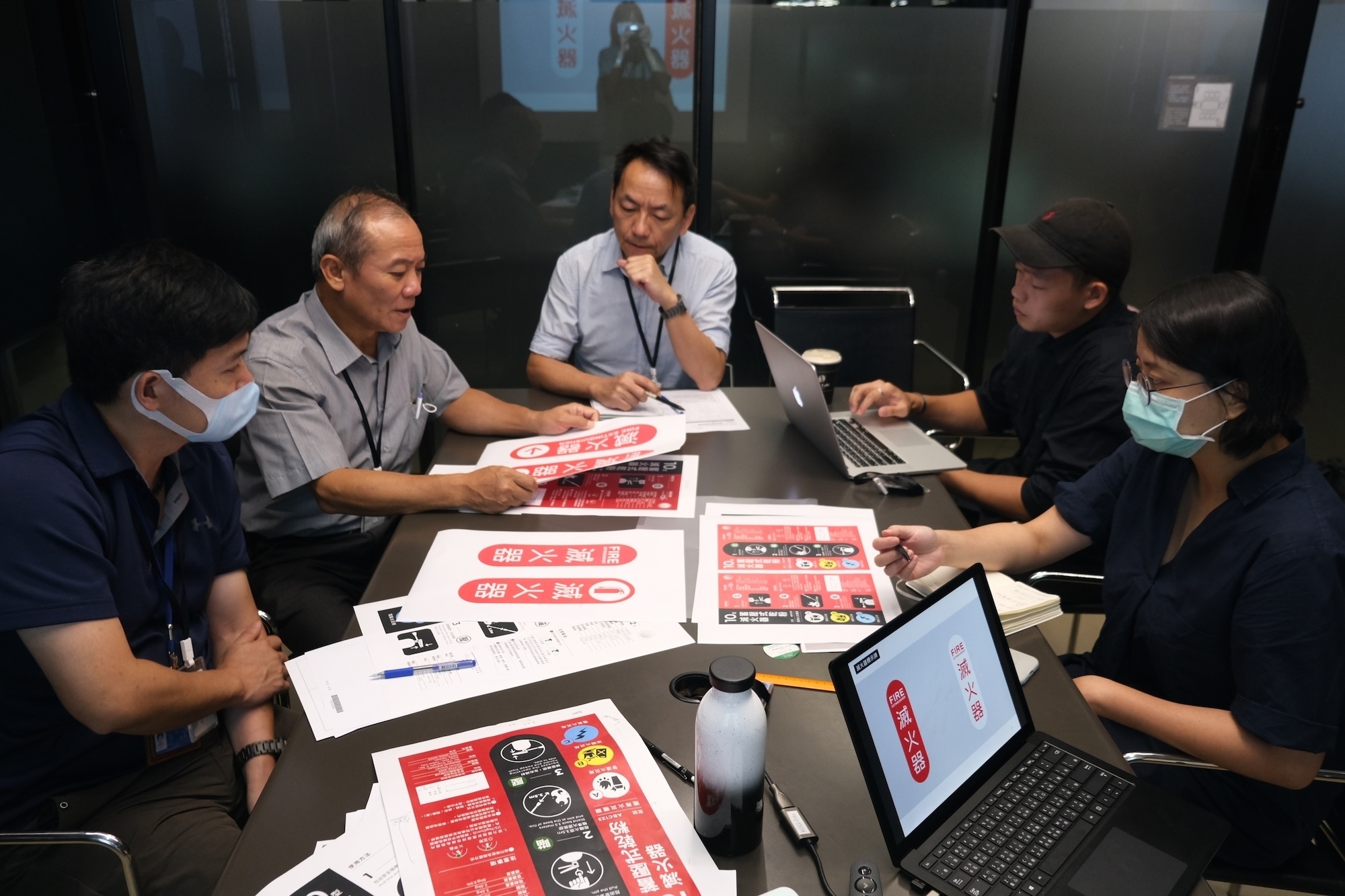 ▲ The interdisciplinary team jointly reviews, discusses, and refines the designs.
Indoor fire hydrant cabinets offer one example. Although such cabinets are commonly associated with the color red, Taiwanese regulations do not prescribe their color. Instead, they specify the area occupied by the lettering. Regulations govern only the name of the equipment displayed on the cabinet, such as “fire hydrant cabinet,” while the graphics and wording used to explain operating procedures are not standardized. As a result, cabinets in Taiwan feature a wide variety of graphics and terminology, including instructions such as “Open the valve” and “Release the firefighting water. ”
Fire extinguisher labels, meanwhile, are legally required to display 18 items of information. Some are intended to communicate with the public, while others contain technical product information.
Regarding the information design for fire extinguishers and fire hydrant cabinets, IF OFFICE Design Director Yu Feng explained that the demonstration designs reorganized the content according to the hierarchy of information and its intended audience. The designs were guided by three principles: aligning with the public’s existing knowledge and experience, accommodating established industry practices, and ensuring practical implementation.
The resulting designs establish a clear visual hierarchy and logical information flow, with appropriate graphics, wording, and presentation formats. This makes the information easier for users to absorb and understand, while also facilitating adoption by the industry. The color system was also carefully planned to ensure adequate legibility for people with color blindness or other color vision deficiencies.
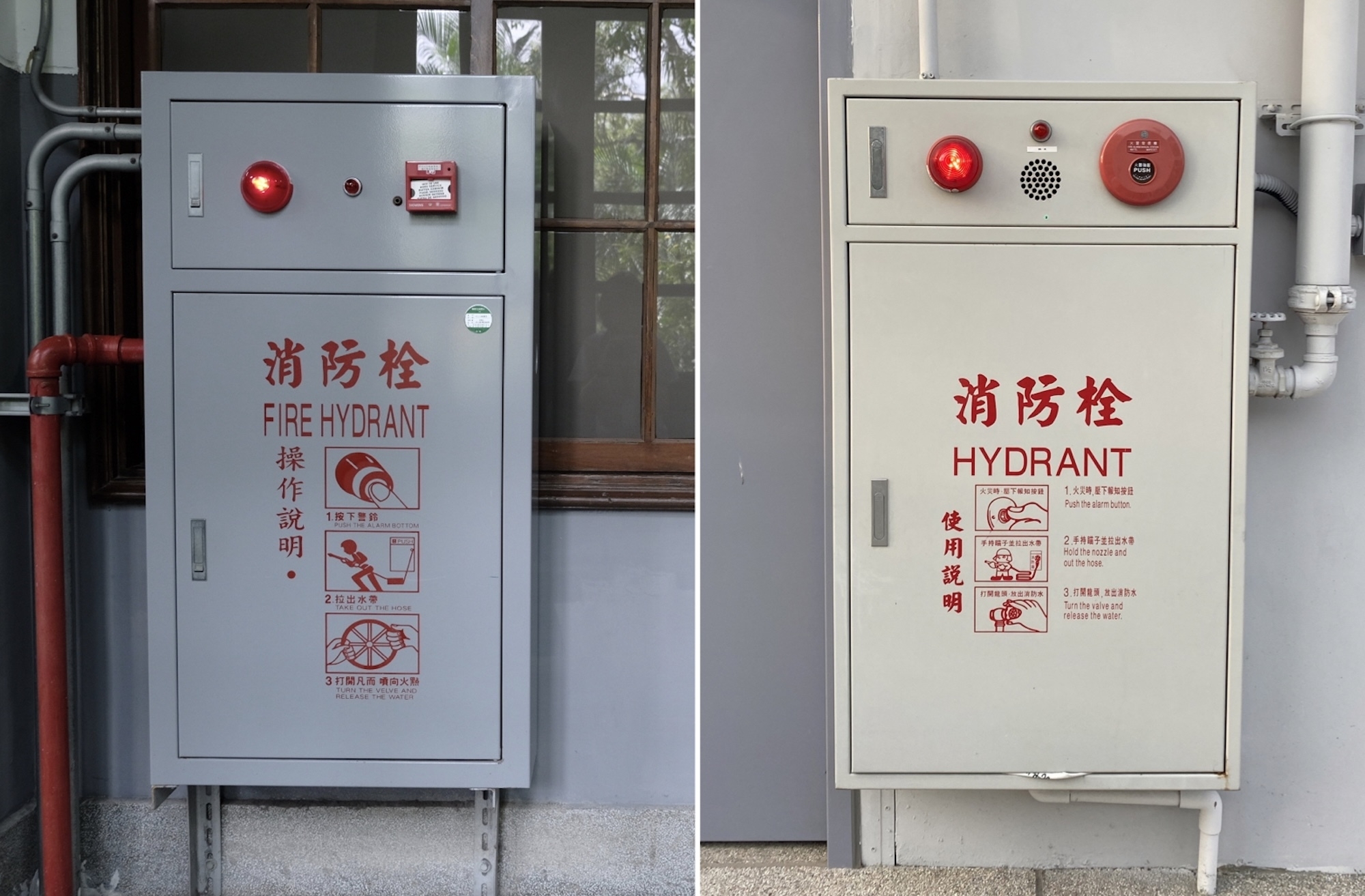 ▲ Existing fire hydrant cabinets in Taiwan feature a wide variety of graphics and wording, including instructions such as “Open the valve” and “Release the firefighting water. ”
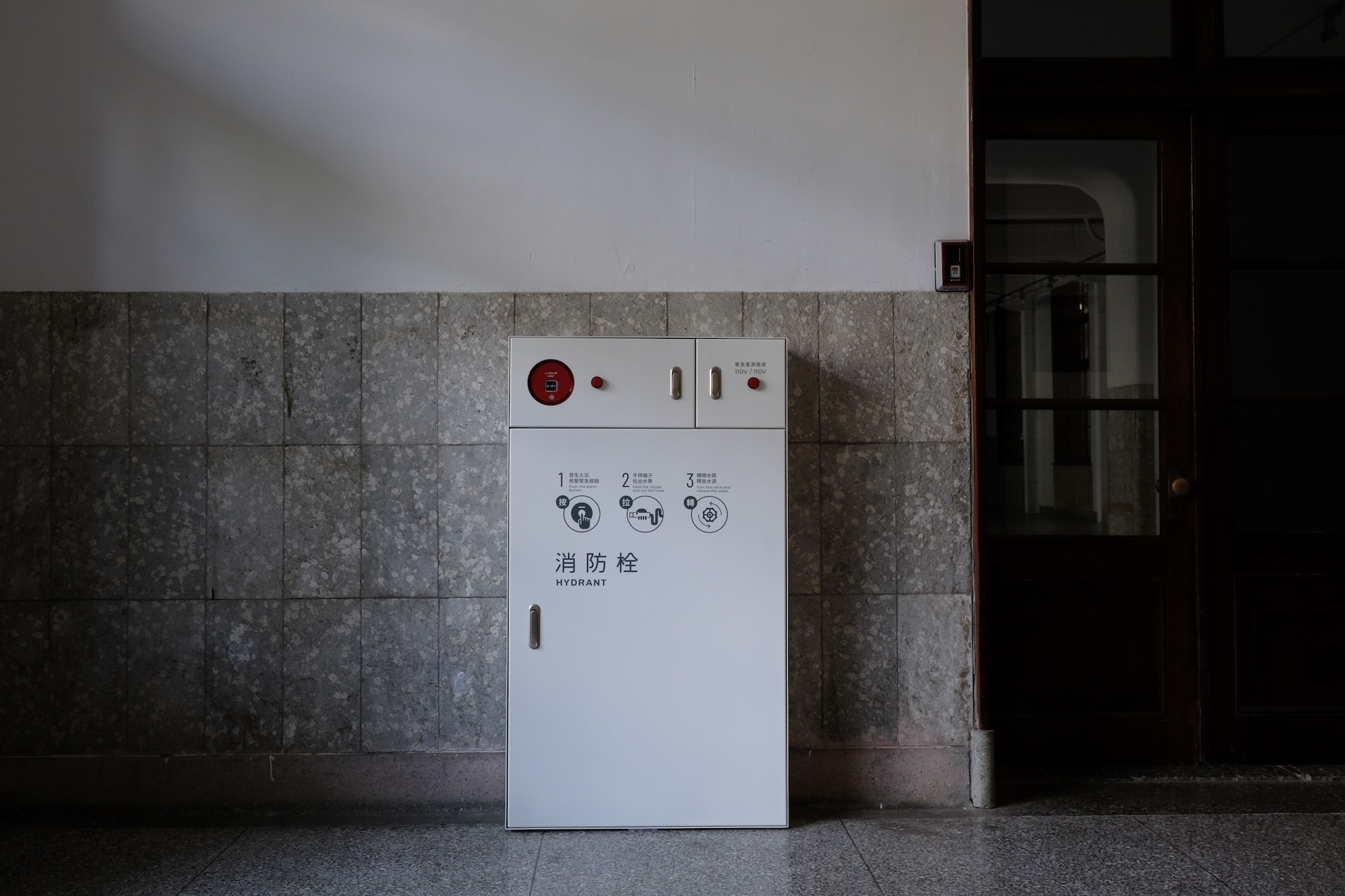 ▲ Fire hydrant cabinet design prototype: a simplified front panel, refined border detailing that softens the original rugged lines, and redesigned graphics and text.
From a product design perspective, PiliWu-Design Design Director Pili Wu proposed elevating the equipment’s positioning “from an industrial product to an everyday object. ” The team adopted a neutral design language and production methods already familiar to the industry, allowing the equipment to blend into a wider variety of environments while enabling manufacturers to build upon their existing production capabilities.
For the fire hydrant cabinet, for example, the front panel was simplified, while refined edge detailing softened the cabinet’s formerly rugged appearance. Its dimensions were also modularized to reduce irregular and one-off sizes, making the cabinets easier to manufacture and apply.
Overall, the integration of different design disciplines transformed fire safety equipment—previously treated as a collection of individual components—into a more cohesive and coordinated system.
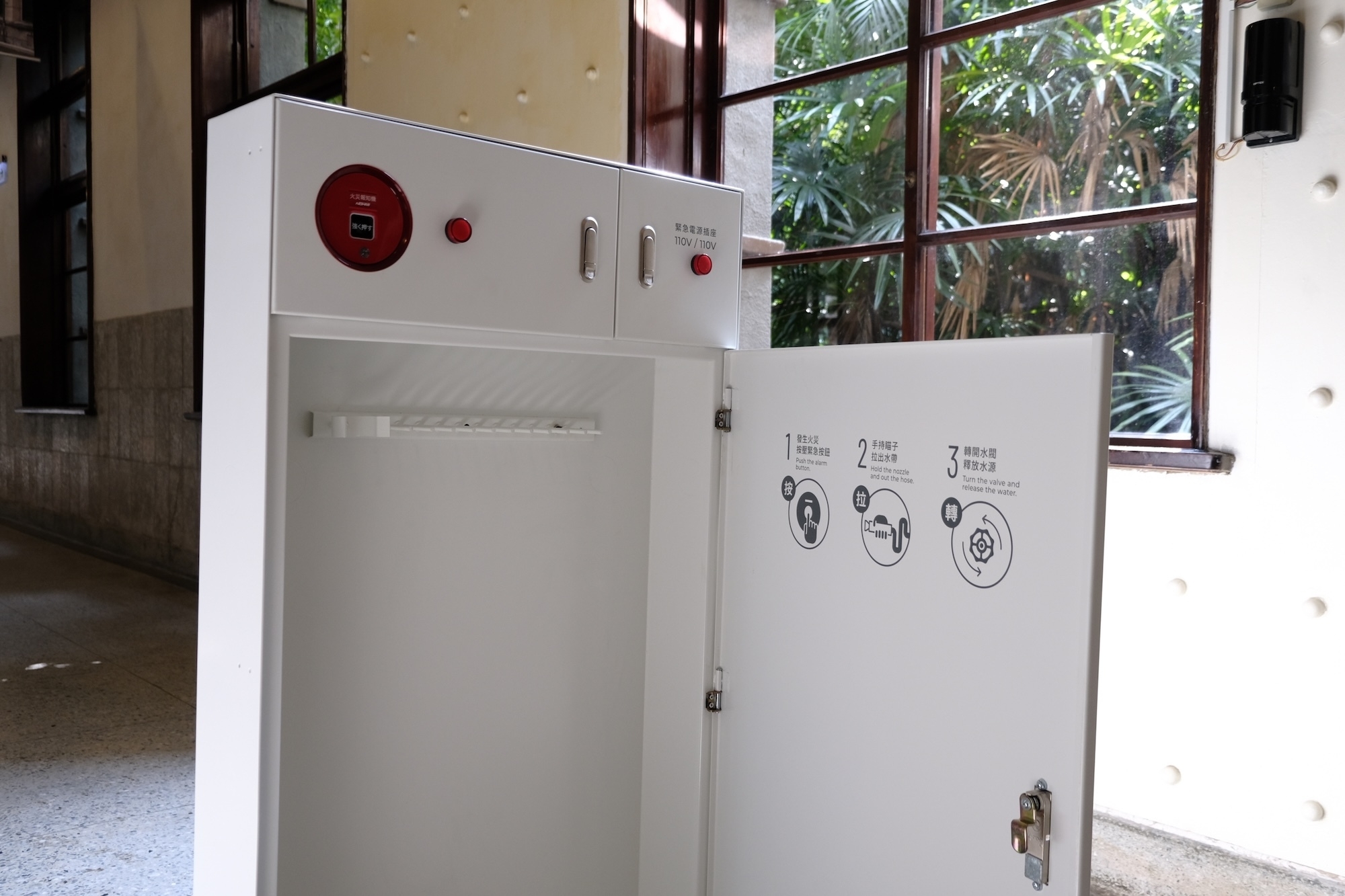 ▲ Fire hydrant cabinet design prototype: operating instructions are printed on the inside of the cabinet door to support an intuitive sequence of use.
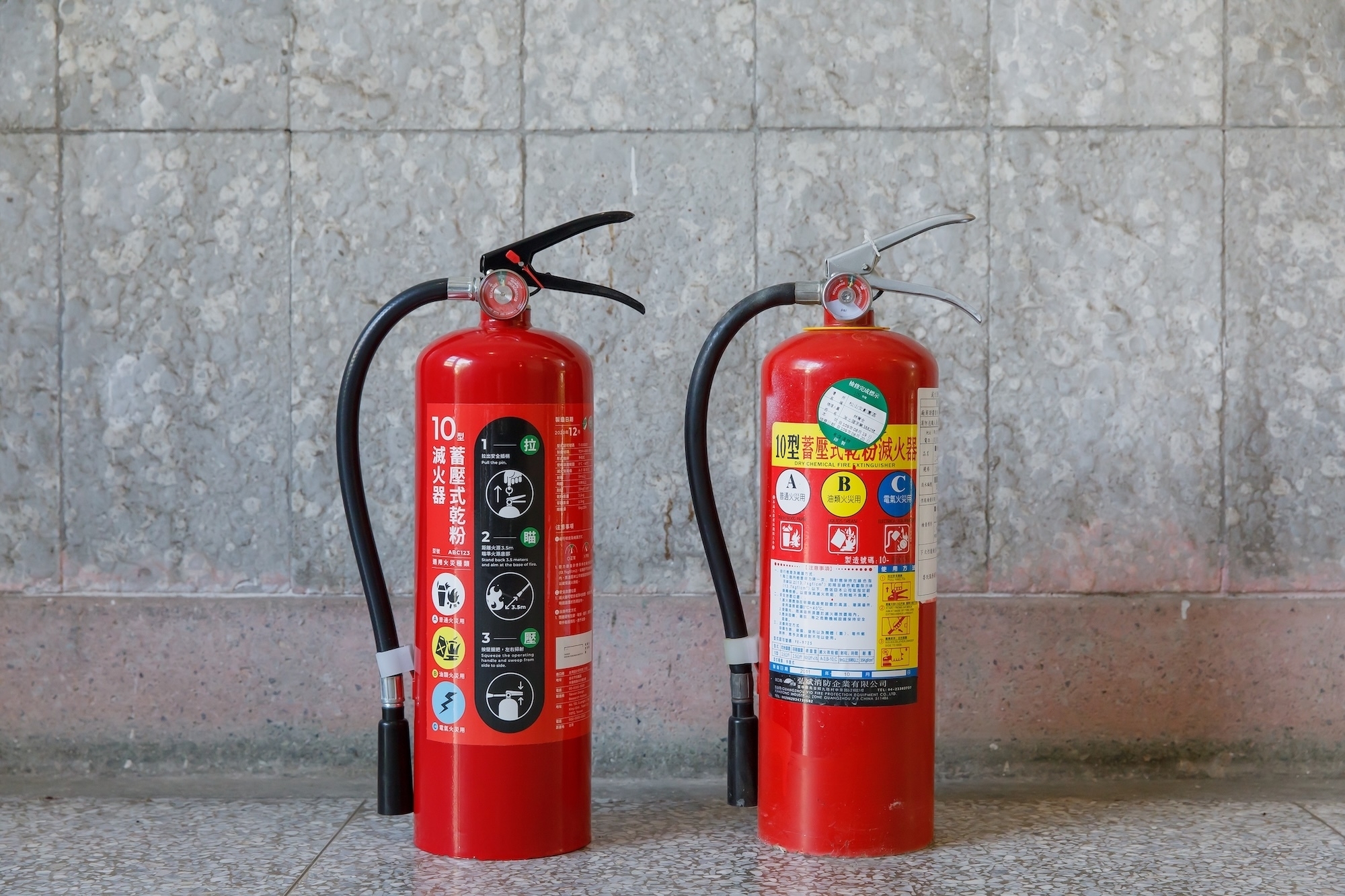 ▲ Left: demonstration design prototype; right: an existing fire extinguisher.
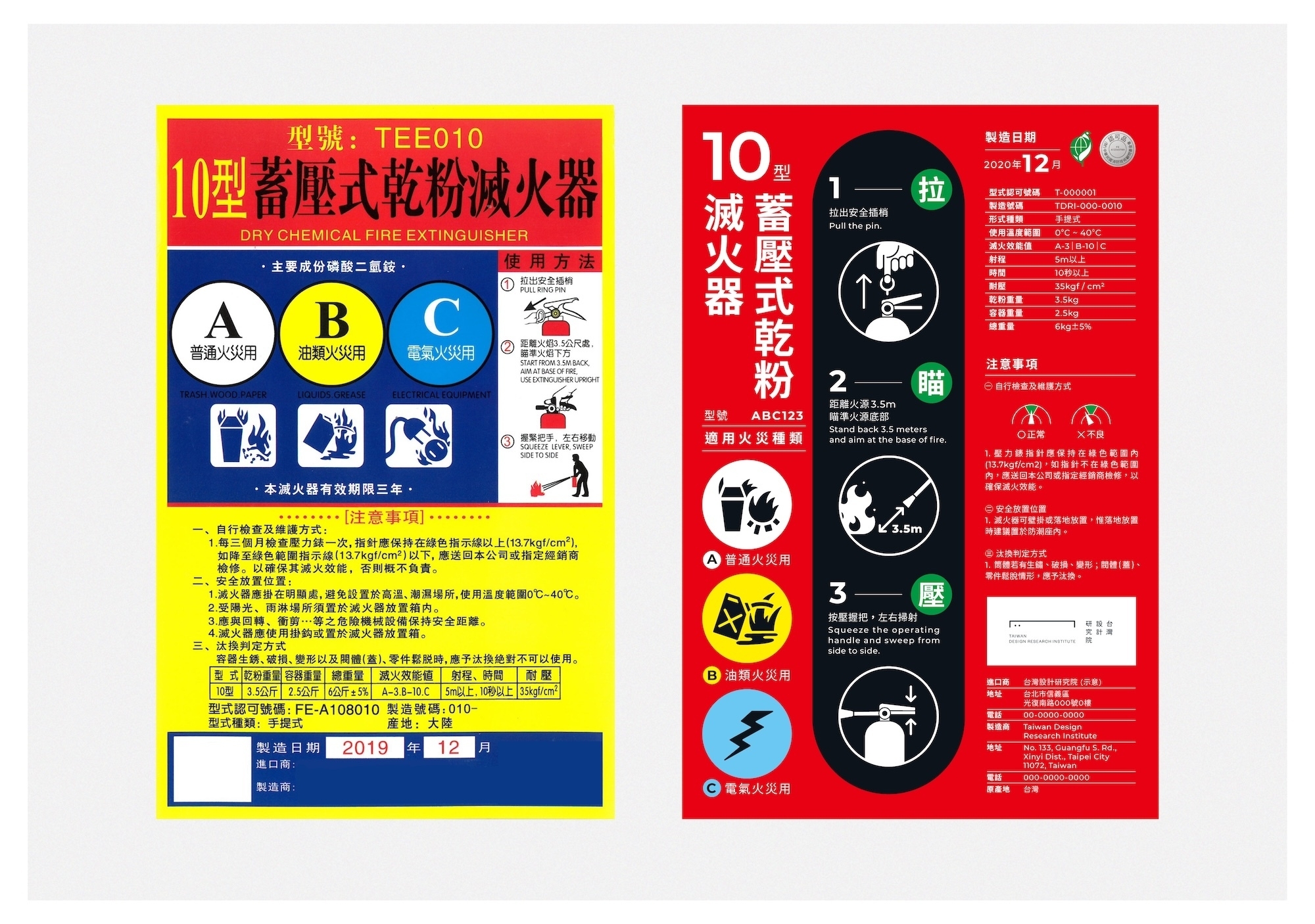 ▲ Left: existing fire extinguisher label; right: a demonstration design reorganized according to information hierarchy and reading sequence. Two versions, red and white, are available.
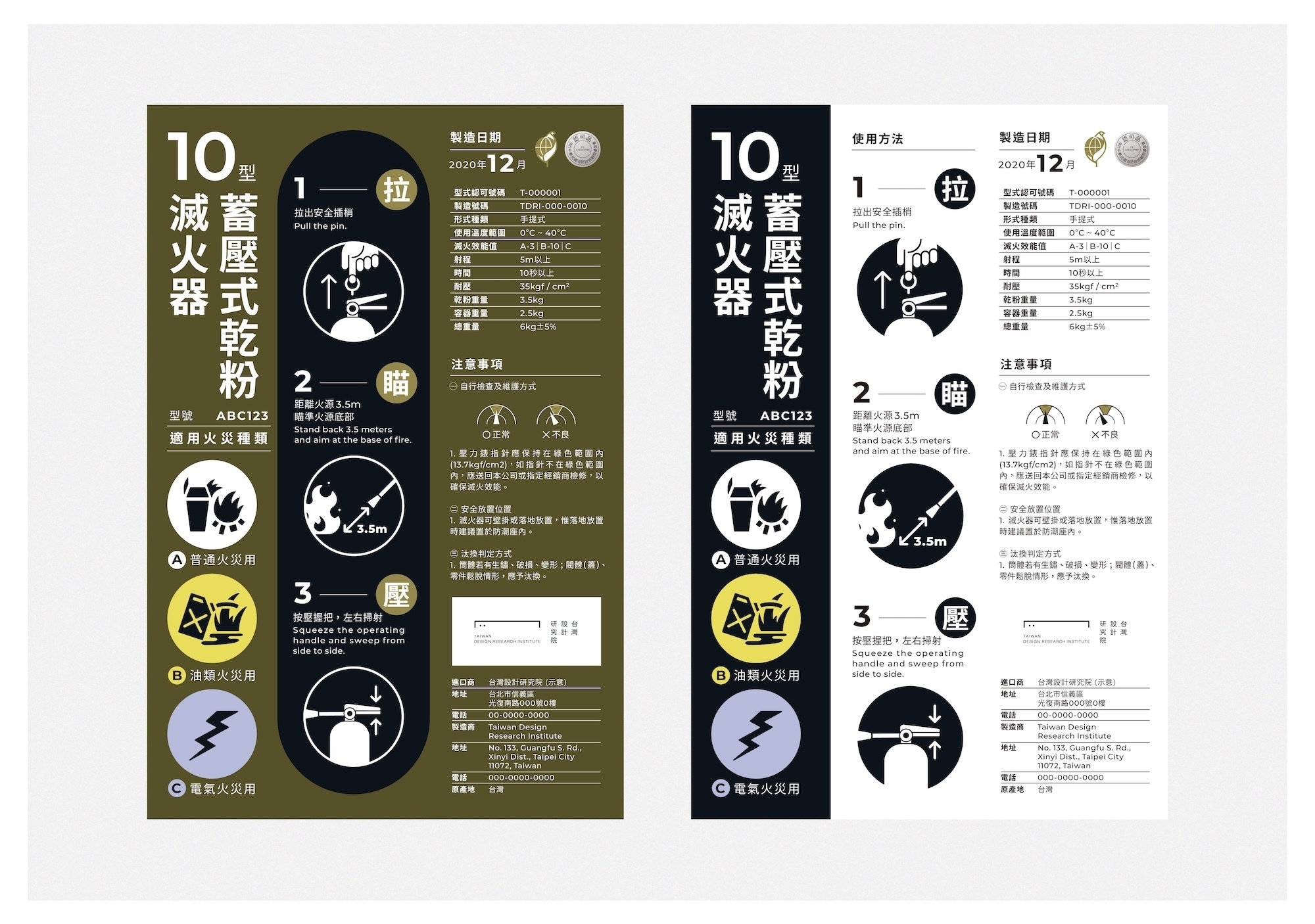 ▲ Legibility for people with color vision deficiencies was also considered, as demonstrated with the red label. (Simulation of protanopia and protanomaly. )
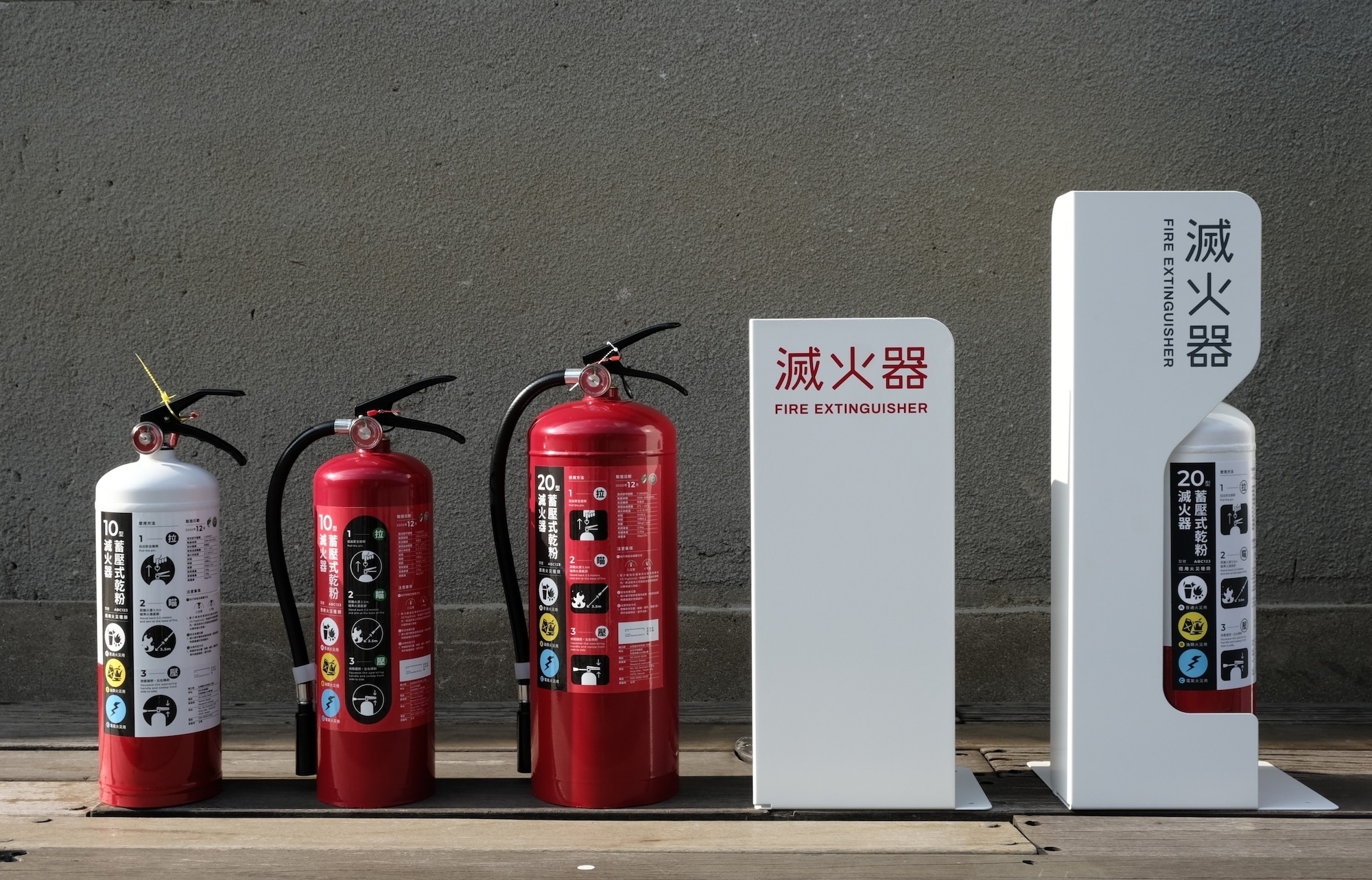 ▲ Selected demonstration design prototypes. From left to right: a fire extinguisher cylinder in “25_Red”; redesigned information labels for Type 10 and Type 20 extinguishers; and two moisture-resistant fire extinguisher stands.
Open-Source Design Guidelines Support Industry Upgrading and Urban Aesthetics
TDRI compiled the project outcomes into a Design Specification Manual. The manual will be provided to the NFA, which will grant fire safety equipment manufacturers in Taiwan royalty-free use of the designs. It contains detailed design explanations, artwork, and relevant engineering drawings, clearly indicating recommended applications, materials, fabrication methods, and editable areas to facilitate industry adoption.
Minister of the Interior Hsu Kuo-yung stated, “Fire safety equipment that combines safety, convenience, and aesthetics—and draws upon international fire safety cases and standards—will integrate more naturally into our surroundings. The release of the Design Specification Manual will also bring substantial benefits to fire safety equipment manufacturers.”
The redesign process also contributed to the review and amendment of four fire safety standards and regulations, including the Approval Criteria for Fire Extinguishers and the Standard for Installation of Fire Safety Devices Based on Use and Occupancy. These amendments will help Taiwan’s fire safety regulations keep pace with international standards and current developments. The NFA is currently undertaking the amendment process, which is expected to be completed by the end of the year.
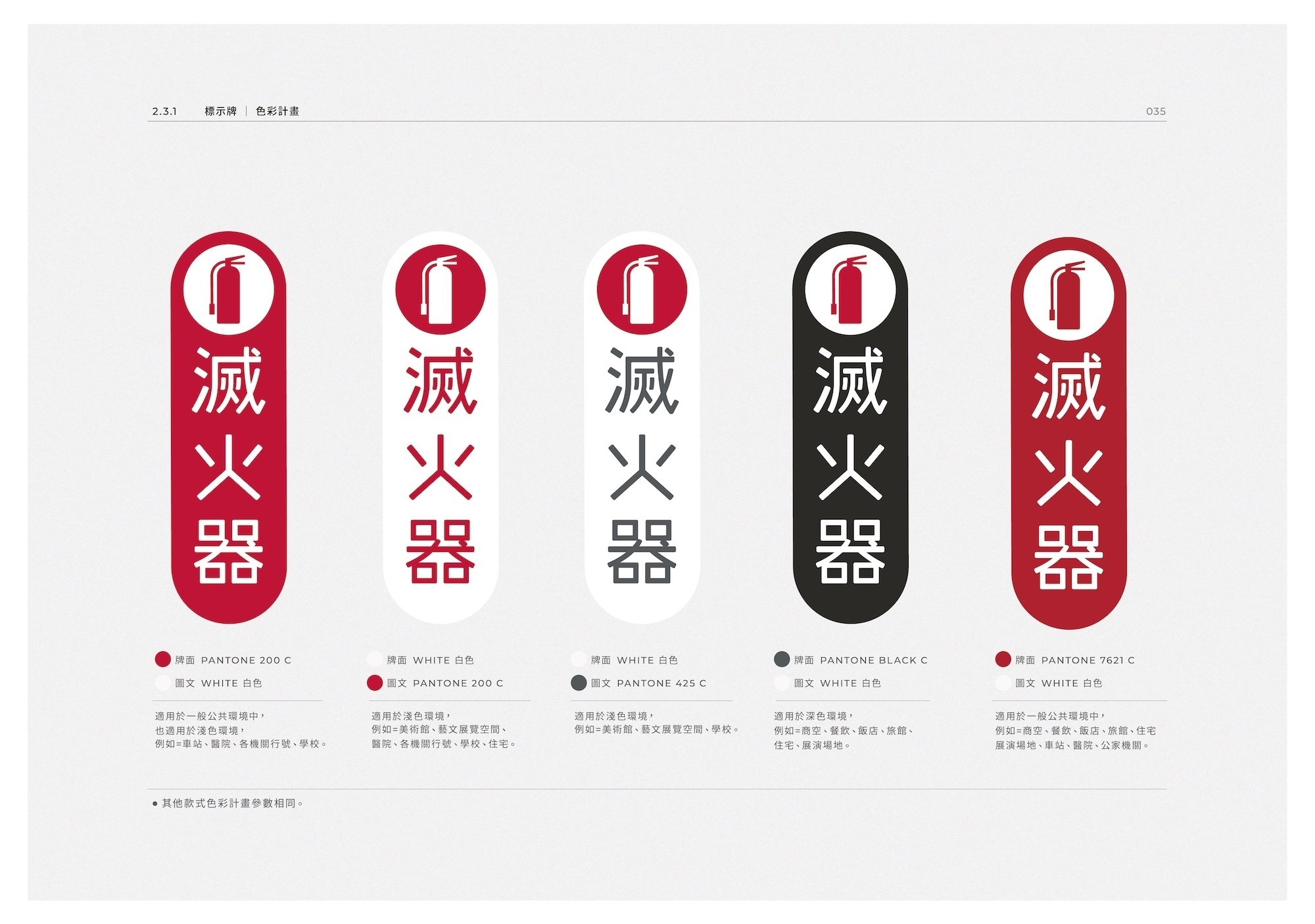 ▲ Fire extinguisher sign section of the Design Specification Manual: standardized wording and multiple color options are provided for industry reference. Certain versions may only be used after the relevant fire safety regulations are amended.
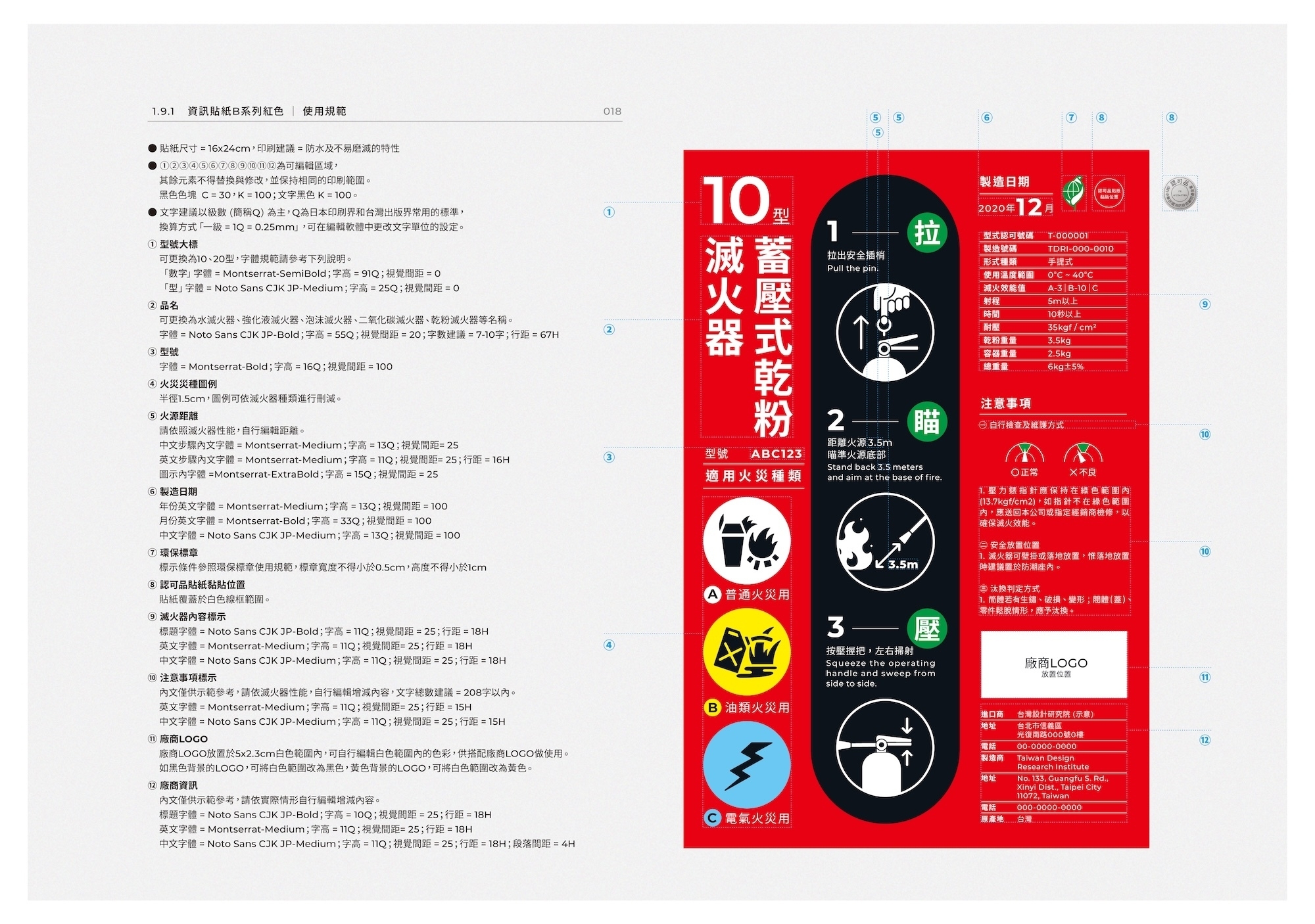 ▲ Fire extinguisher information label section of the Design Specification Manual: usage requirements and editable areas are clearly indicated to facilitate industry adoption.
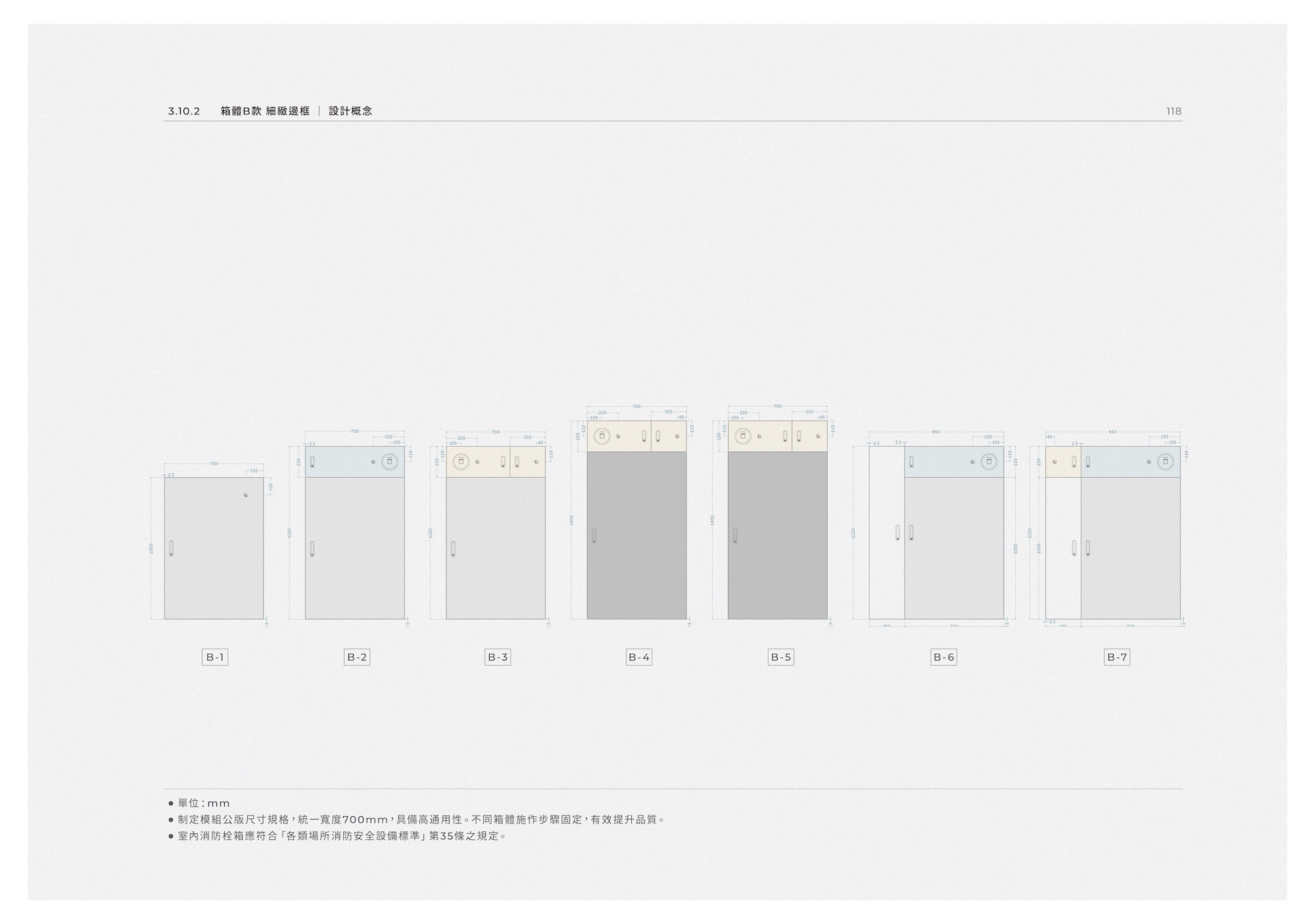 ▲ Fire hydrant cabinet section of the Design Specification Manual: an example of modularized cabinet dimensions, featuring the refined-border series.
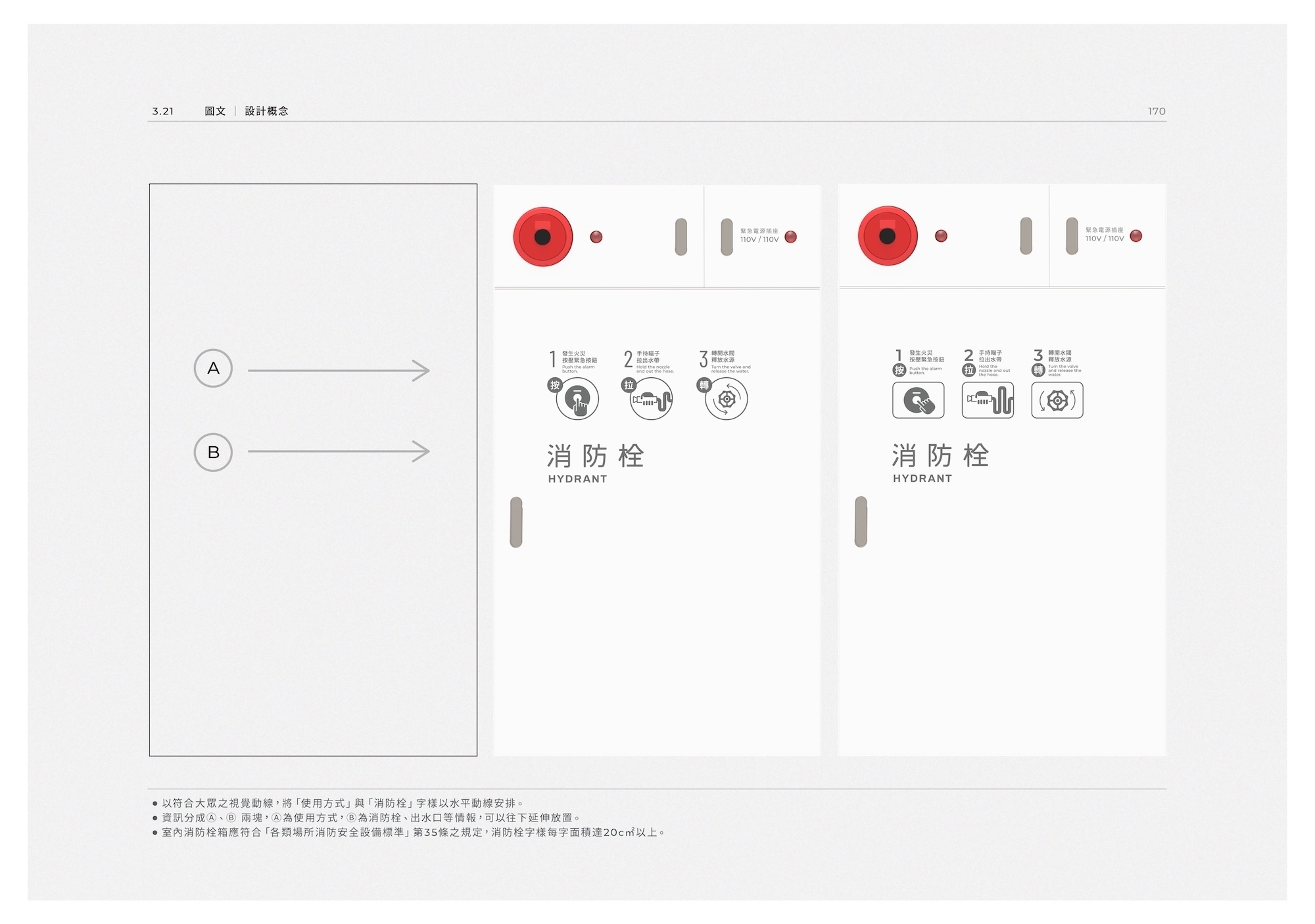
▲ Fire hydrant cabinet section of the Design Specification Manual: two graphic and text options are provided.
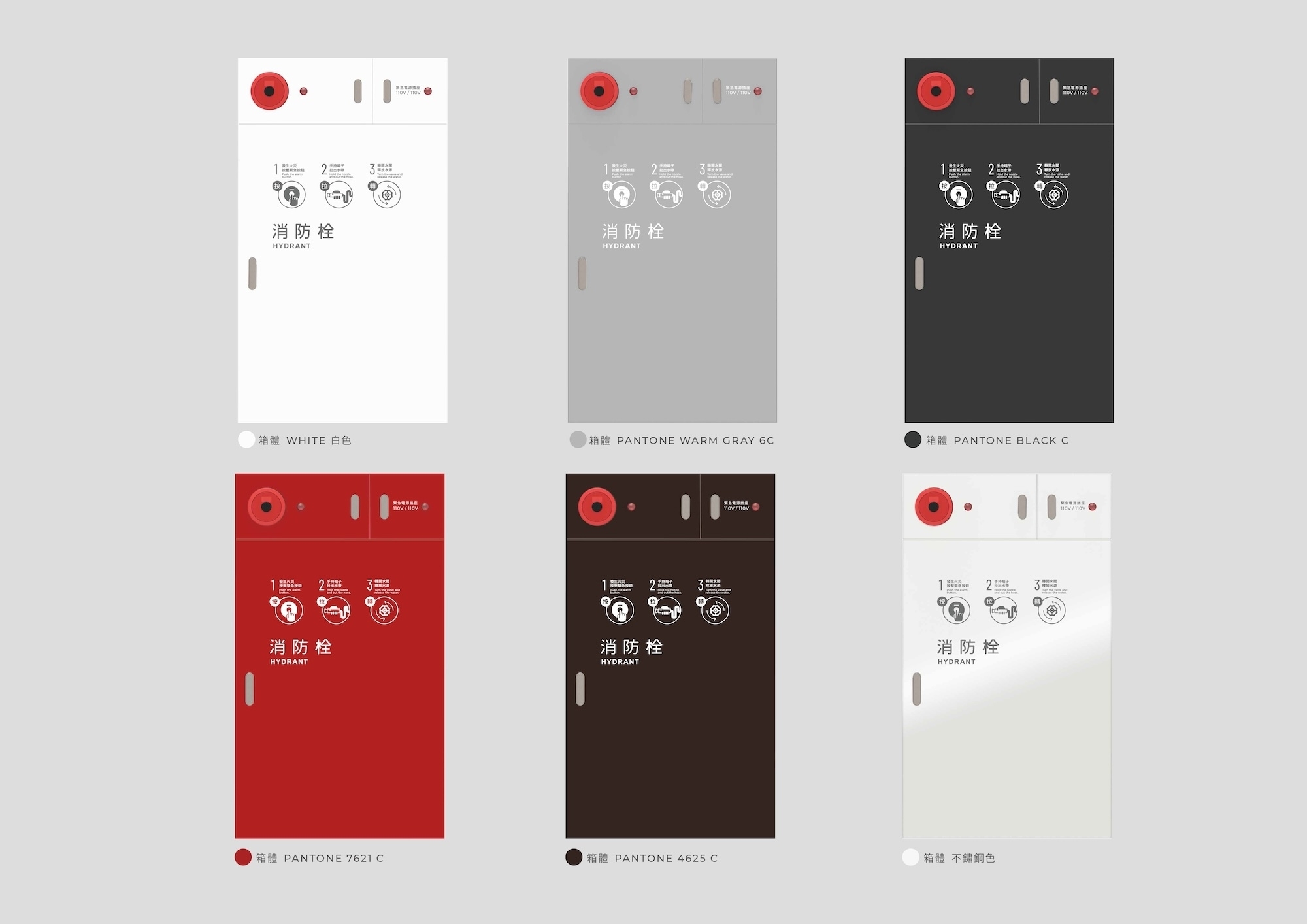 ▲ The Design Specification Manual provides color recommendations and application examples for each item, giving the industry a range of options. Shown here are color examples for fire hydrant cabinets.
Following the release of the prototypes, the project attracted interest from numerous organizations, including the Taipei Performing Arts Center, the Taichung Green Museumbrary, and several private-sector property developers. Discussions are underway regarding the adoption of the designs, and it has been confirmed that selected outcomes will first be implemented at the Taipei Performing Arts Center.
Organized by | Industrial Development Administration, Ministry of Economic Affairs; National Fire Agency, Ministry of the Interior
Project Implementation | Taiwan Design Research Institute
Co-organized by | Taiwan Fire Protection Safety Center Foundation; Taiwan Fire Equipment Industry Association
Project Advisor | Emil Chao, President of the Chinese Society of Interior Designers
Design Directors | Visual Design: Yu Feng, IF OFFICE; Product Design: Pili Wu, PiliWu-Design
Visual Design | IF OFFICE
Product Design | PiliWu-Design
Special Thanks | Hong Yuan Enterprise Co. , Ltd. ; Taichung Extinguishing Enterprise Co. , Ltd. ; Taur Sheng Enterprise Co. , Ltd.