A Better City:Opening the City to New Scenery: A Public Space Transformation
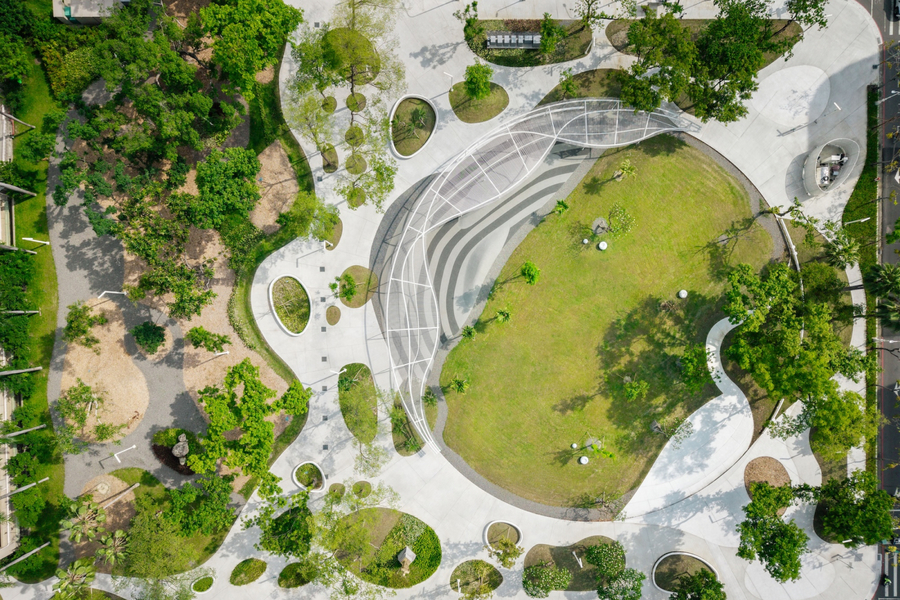
▲ Yancheng Civic Plaza officially opened this year, long-awaited by Kaohsiung residents.
The corrugated iron fence at the intersection of Zhongzheng 4th Road and Dayong Road has finally come down.
As the eye travels across the opening, a wide plaza comes into view. White pergolas unfold along a circular path, reflecting the naturally undulating grass slopes; mist drifts gently from the canopy above, carrying the fragrance of gardenias through the air and bringing a welcome coolness to passersby.
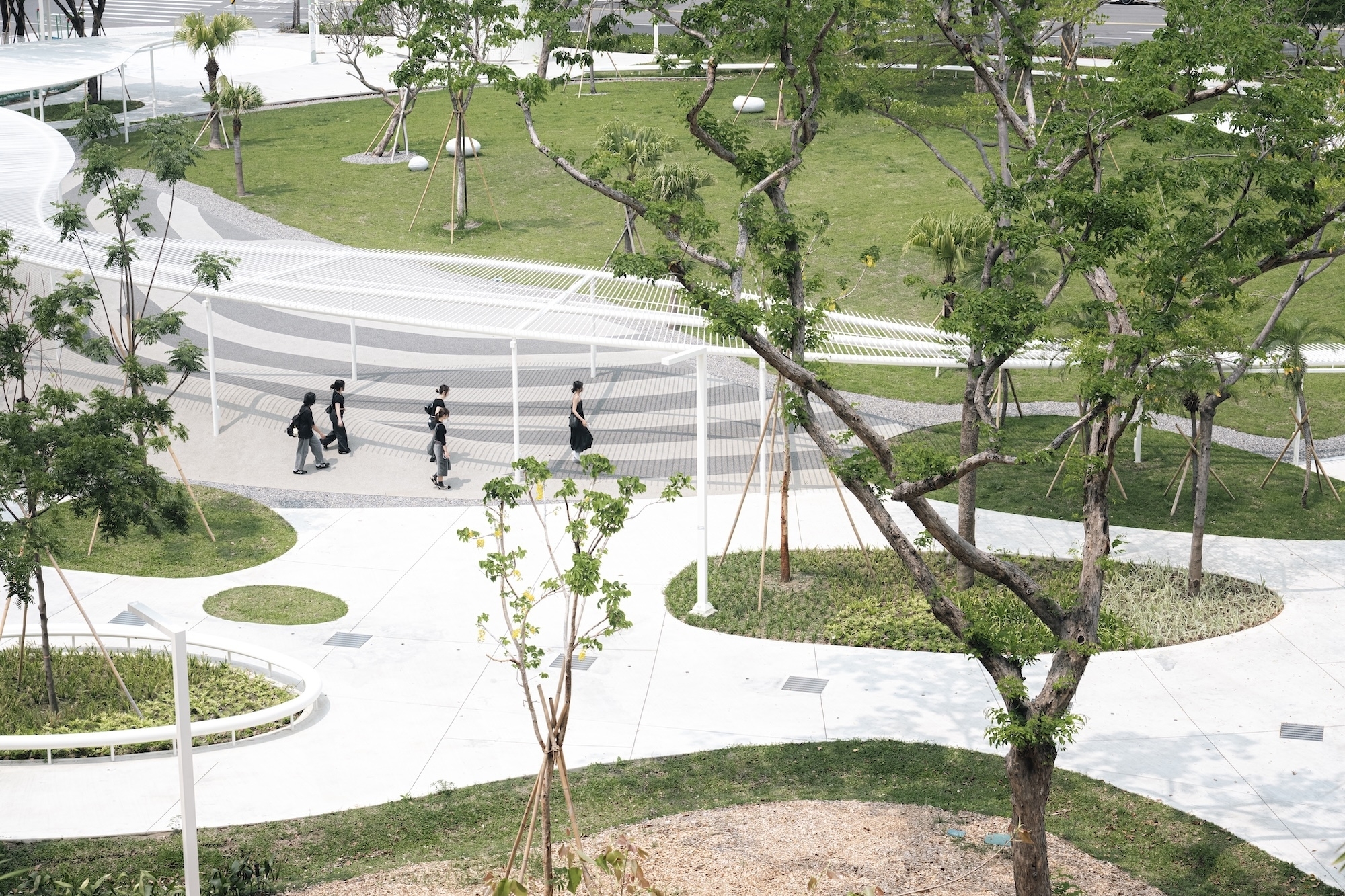 ▲ The bright, open space draws visitors in — Yancheng Civic Plaza welcomes back the crowds.
From Roundabout to Plaza: Breathing New Life into Idle Space
Yancheng Civic Plaza sits at the intersection of Dayong Road and Zhongzheng 4th Road, covering nearly one hectare at the core of the Yancheng district. Originally a traffic roundabout built during the Japanese colonial era, it served as a key junction channeling vehicles into Yancheng. In 2001, as part of the Kaohsiung MRT construction, the roundabout was redeveloped into "Yancheng Civic Plaza," connecting 228 Memorial Park and the Aihé riverside walkway, and became a popular leisure destination at the time. The water fountain show installed then was once a major crowd draw.
Dr. Shen Zhengzhang, an ophthalmologist who has practiced in the area for over 25 years, still remembers those bustling days. "In the first two years after it opened, you'd see many parents bring their children to watch the water show — it was quite lively," he recalled. But as public enthusiasm faded and the fountain was shut down over safety concerns, foot traffic dropped sharply. Even the emergence of the Pier-2 Art Center failed to bring new visitors, and he admitted that nearby residents had gradually stopped coming.
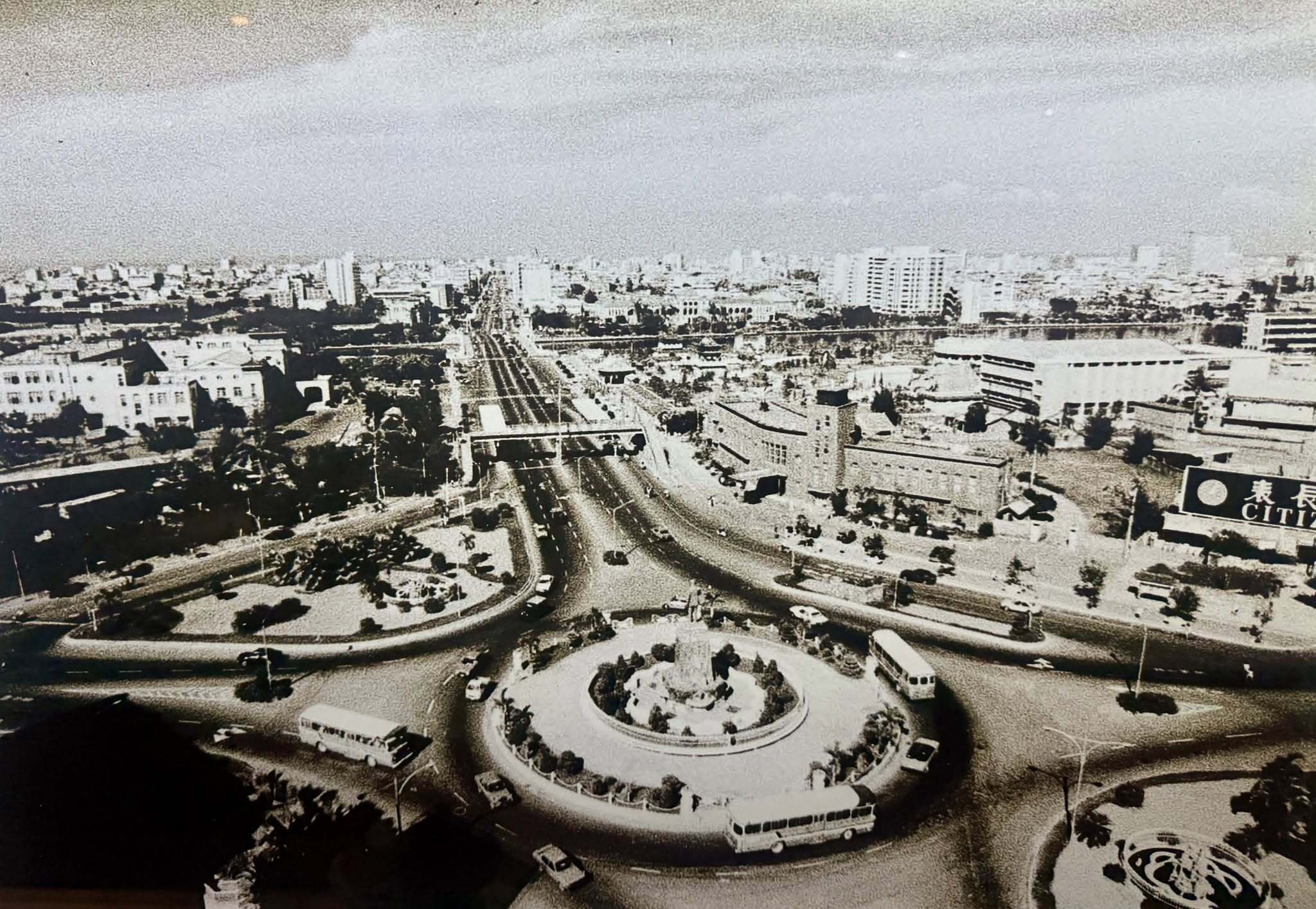 ▲ The plaza's predecessor was a roundabout, one of the main gateways into Yancheng. (Source: Kaohsiung History Museum)
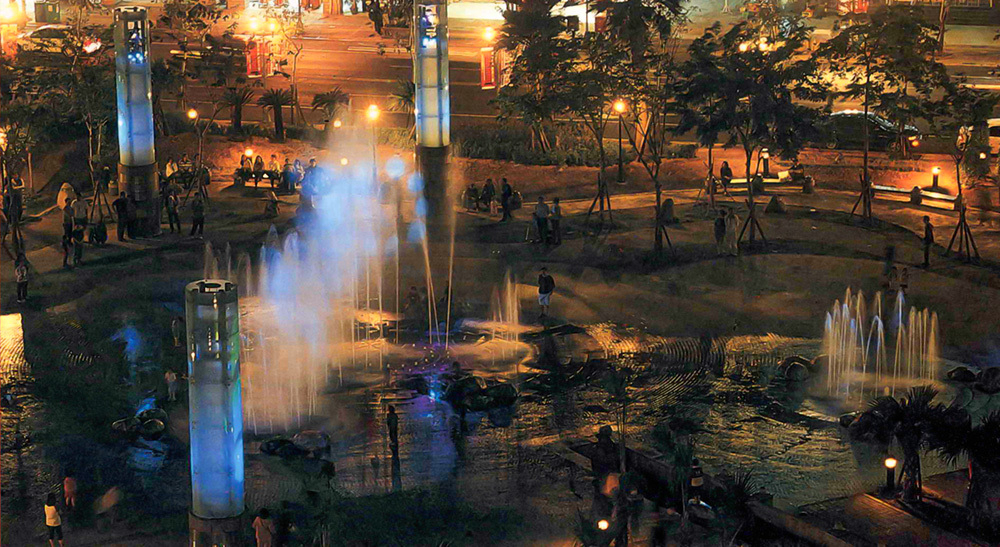 ▲ The civic plaza once featured a water fountain installation; the sound-and-light water show was a popular attraction of its time. (Source: Kaohsiung City Government News Bureau, Kaohsiung Pictorial)
The plaza, long forgotten by residents, finally saw change come in 2023.
Taiwan Design Research Institute partnered with the Parks Office, Public Works Bureau, Kaohsiung City Government to launch the "Urban Aesthetics Plan." Through spatial redesign, what had been an idle, underused site was transformed into a civic node that residents are now willing to enter, linger in, and gather at. "We hoped that through this renovation project, we could activate this idle site and inject new vitality into the surrounding neighborhood," said Deputy Director of the Parks Office, Lo Chengyuan.
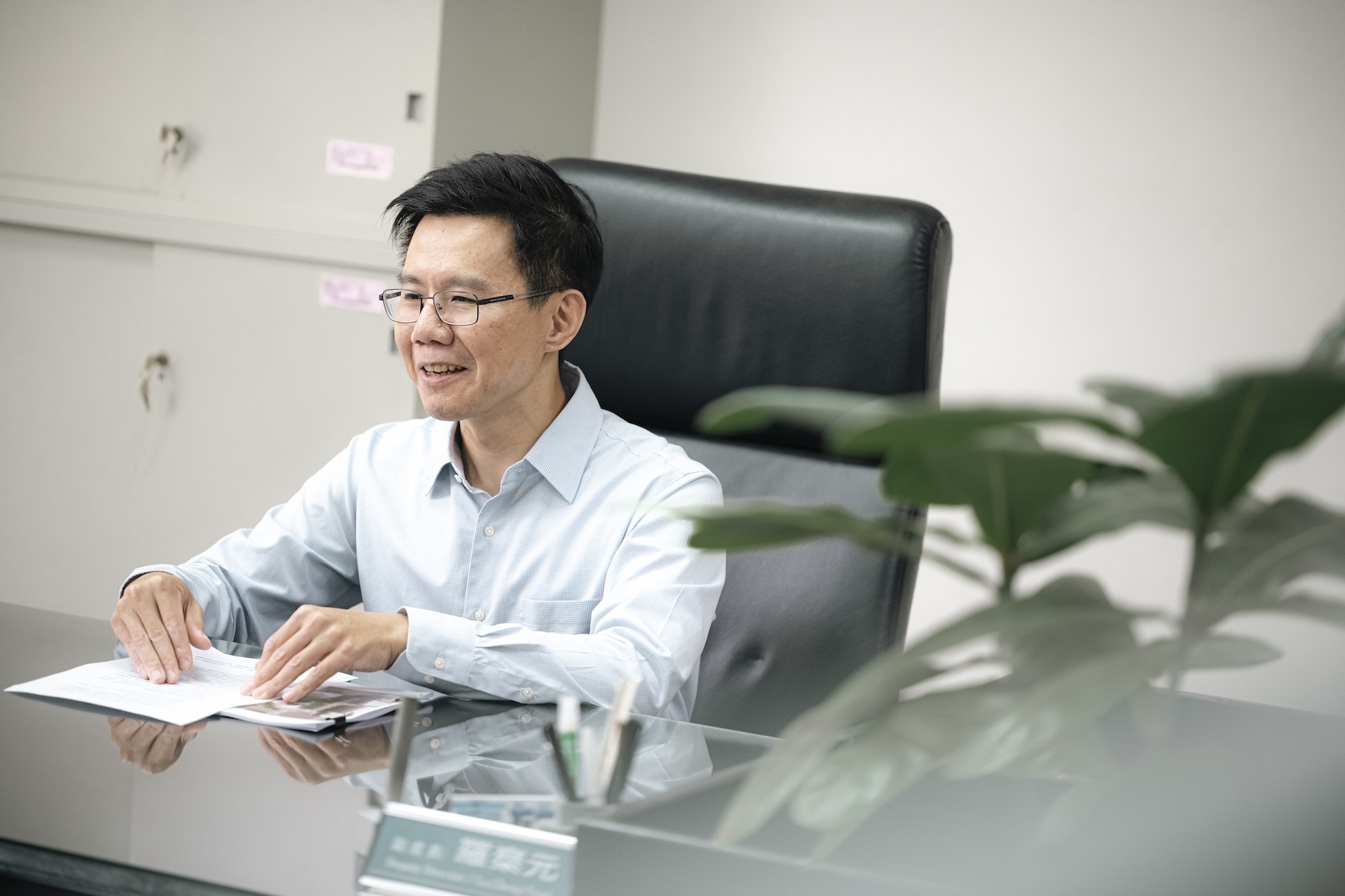 ▲ Deputy Director of the Parks Office, Public Works Bureau, Kaohsiung City Government, Lo Chengyuan, noted that the site is deeply connected to Yancheng's development history and its proximity to the commercial district made it a priority for renovation.
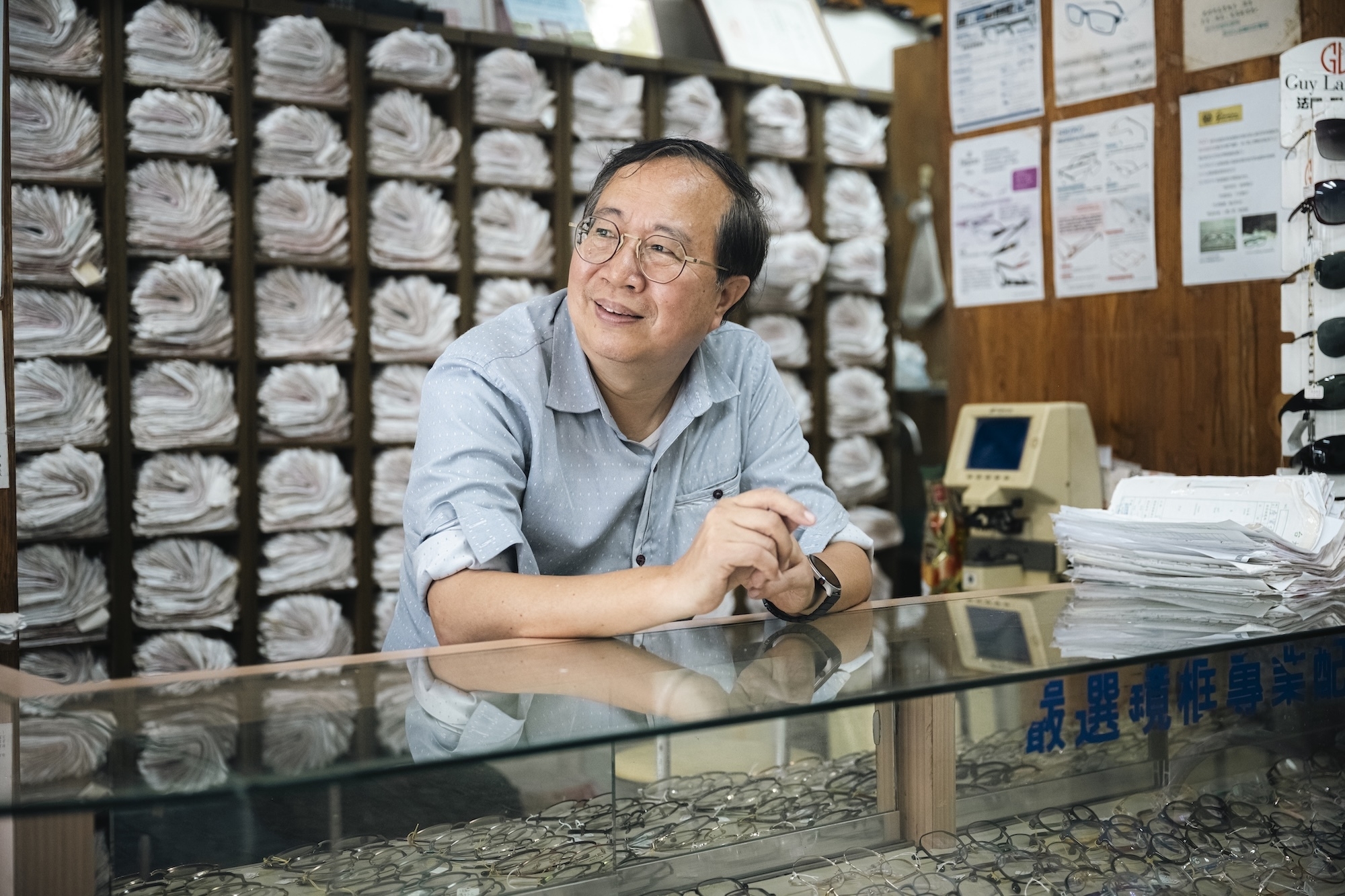 ▲ Dr. Shen Zhengzhang noted that the construction progress of Yancheng Civic Plaza has always been a focus of residents' attention, with many hopes and expectations for the renovation.
From Passing Through to Staying: Reimagining Residents' Relationship with the Plaza
What kind of public space can both meet the needs of Yancheng residents and open up new possibilities for urban aesthetics? After in-depth fieldwork and research, the team from "Atelier Let's + TnC" proposed that strengthening the site's identity as an "urban node" was the key to drawing people back — and the first step in the transformation.
The team reassessed the site's relationship with its surroundings and developed a pedestrian-centered framework called the "Yancheng Stroll Plan," connecting Aihé, Pier-2, and Kaohsiung Port. Within this framework, Yancheng Civic Plaza is no longer just a point where paths converge — it becomes a link in the green corridor extending from the Aihé riverbank. The team describes it as a green water droplet that leaps from the Aihé shore, landing in the city as an urban green island.
Building on this vision, the design team addressed the site's long-standing sense of enclosure by carefully trimming overly dense shrubs, allowing the long-obscured space to be seen again. Passersby can now naturally notice and enter it, re-establishing a connection with the place.
The hard pavement was replaced with a sweeping, soft lawn — not only preserving the spatial memory of the original roundabout, but also giving residents far more freedom in how they use the space. Whether sitting, lying down, running, or gathering for events, people of all ages can feel at ease in the plaza.
The circular path surrounding the lawn was also renovated. The team chose different materials for different needs — brushed concrete, washed aggregate, and PU surfacing — while incorporating gentle terrain variations to manage drainage, allowing rainwater to flow naturally with the contours of the land, responding to southern Taiwan's rainy and high-intensity rainfall climate.
For planting, the team consulted Shen Zhengzhang and other local residents, preserving as many existing trees as possible. Shen recalled: "When the design team came to find me, we walked through the site together. I introduced them to the old trees and suggested they keep the plumeria, golden shower trees, lantana, and golden dewdrop — plants you see in everyday life here." Beyond preserving the old trees, the team also rethought the overall planting arrangement, using tree canopies to shade and cool pathways, and complementing them with the "Yancheng Cool Ring" encircling the walkway, which releases mist at set times to create a microclimate system that wards off the heat. As seasons change, the plants take on different forms, adding subtle variation to daily life.
Rounding out the overall plan, from the atmospheric nighttime lighting design to the pebble-shaped seat sculptures scattered across the lawn, to the wayfinding system designed in line with the "Yancheng Stroll Plan" — professionals from many fields came together to complete Yancheng Civic Plaza's transformation into a contemporary urban node for Kaohsiung.
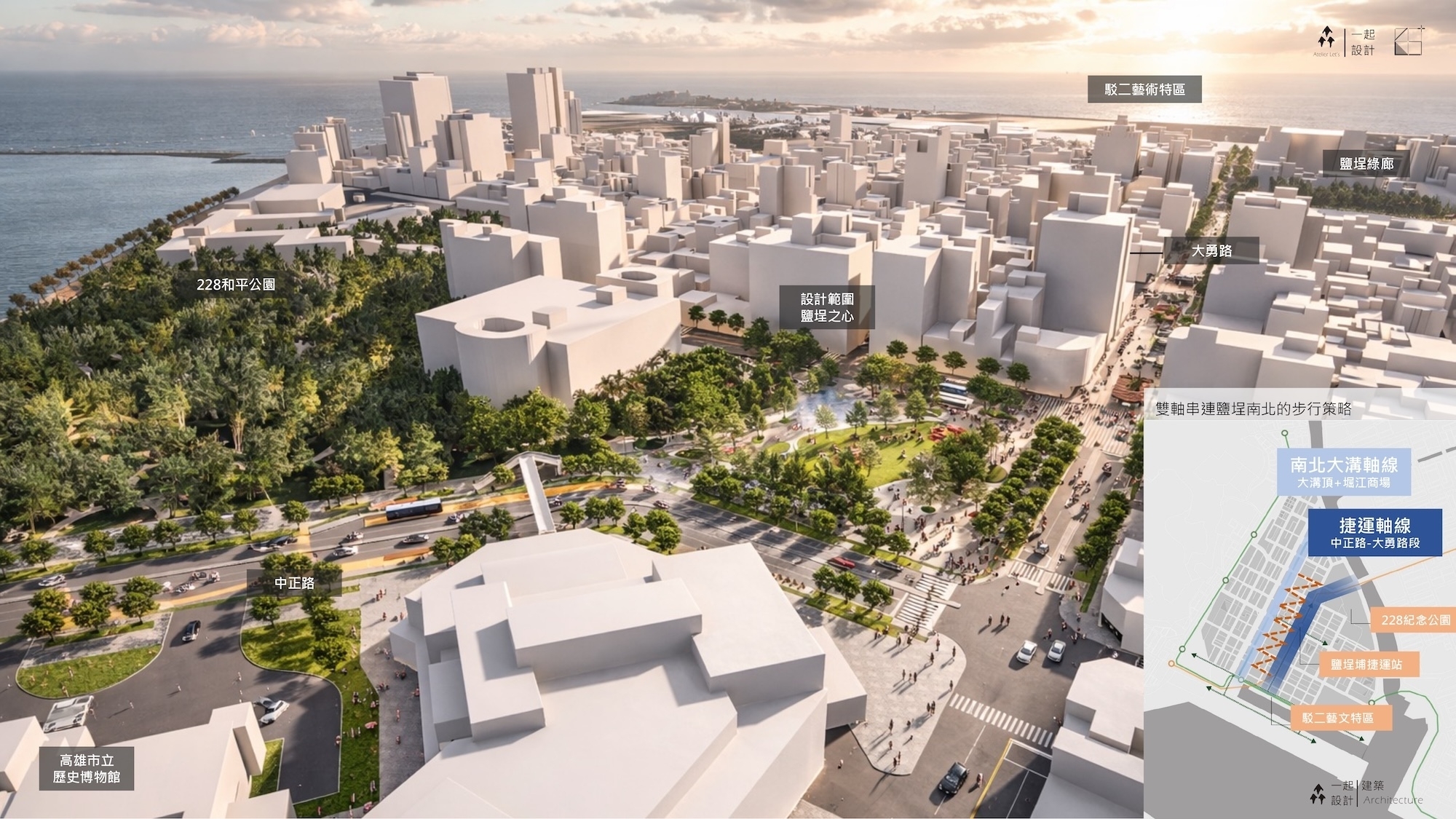 ▲ The "Yancheng Stroll Plan," extending from Yancheng Civic Plaza to Aihé and Pier-2. (Source: Atelier Let's)
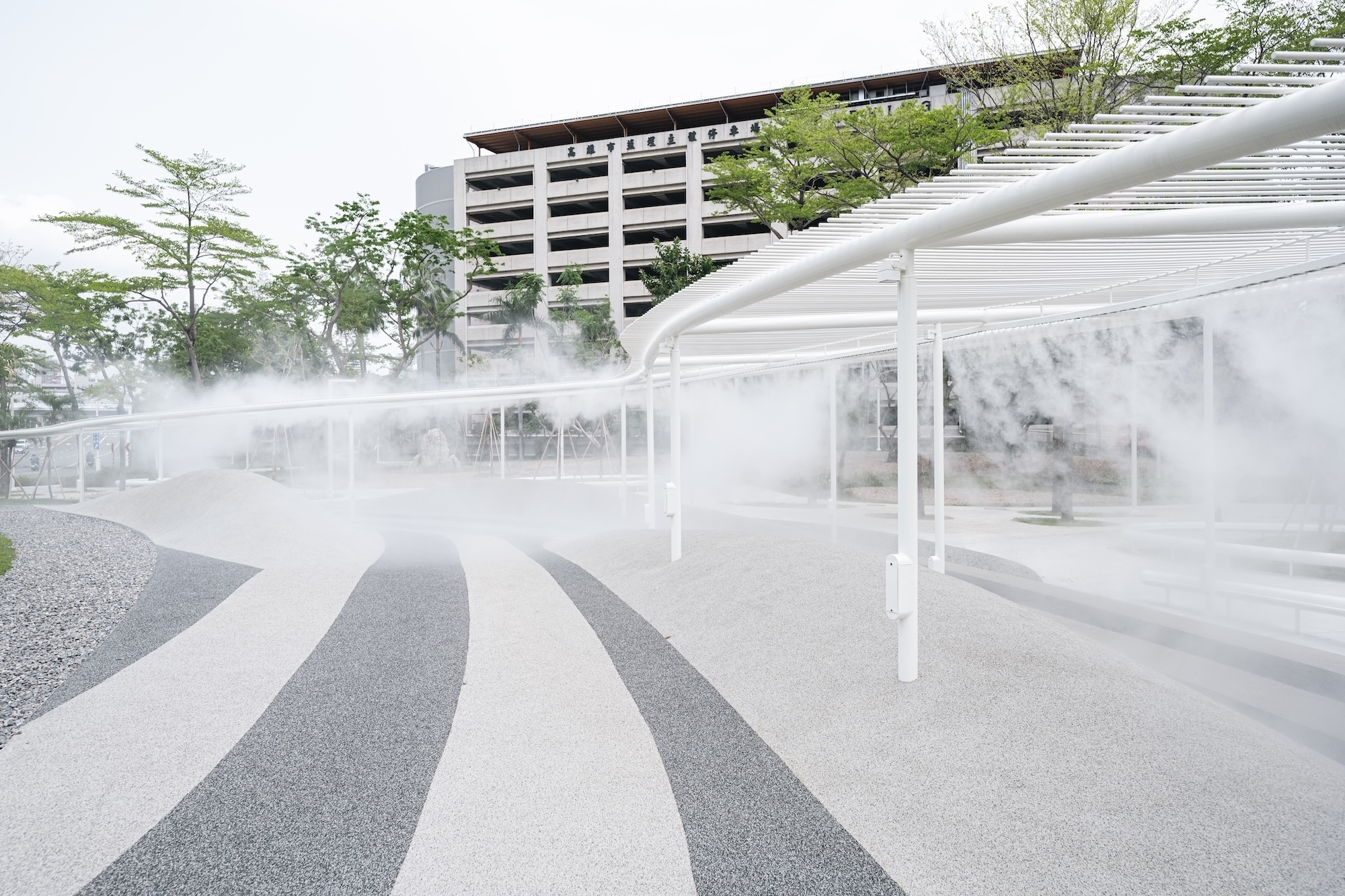 ▲ The Yancheng Cool Ring's irrigation system is positioned according to wind direction; natural airflow carries the mist further, enhancing the overall cooling effect.
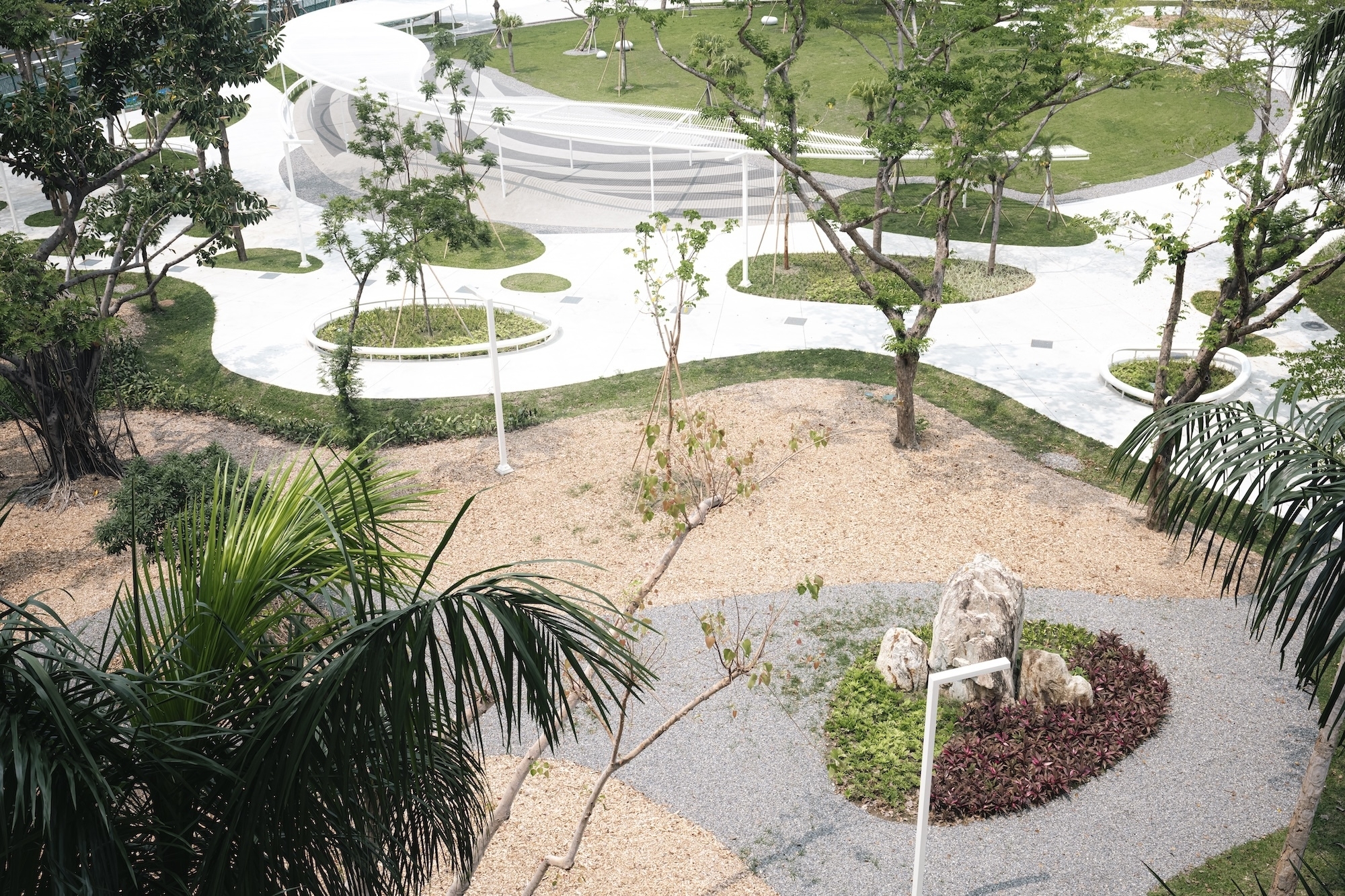 ▲ The design team laid wood chips around the trees along the pathways to protect root systems while maintaining good aeration and moisture retention.
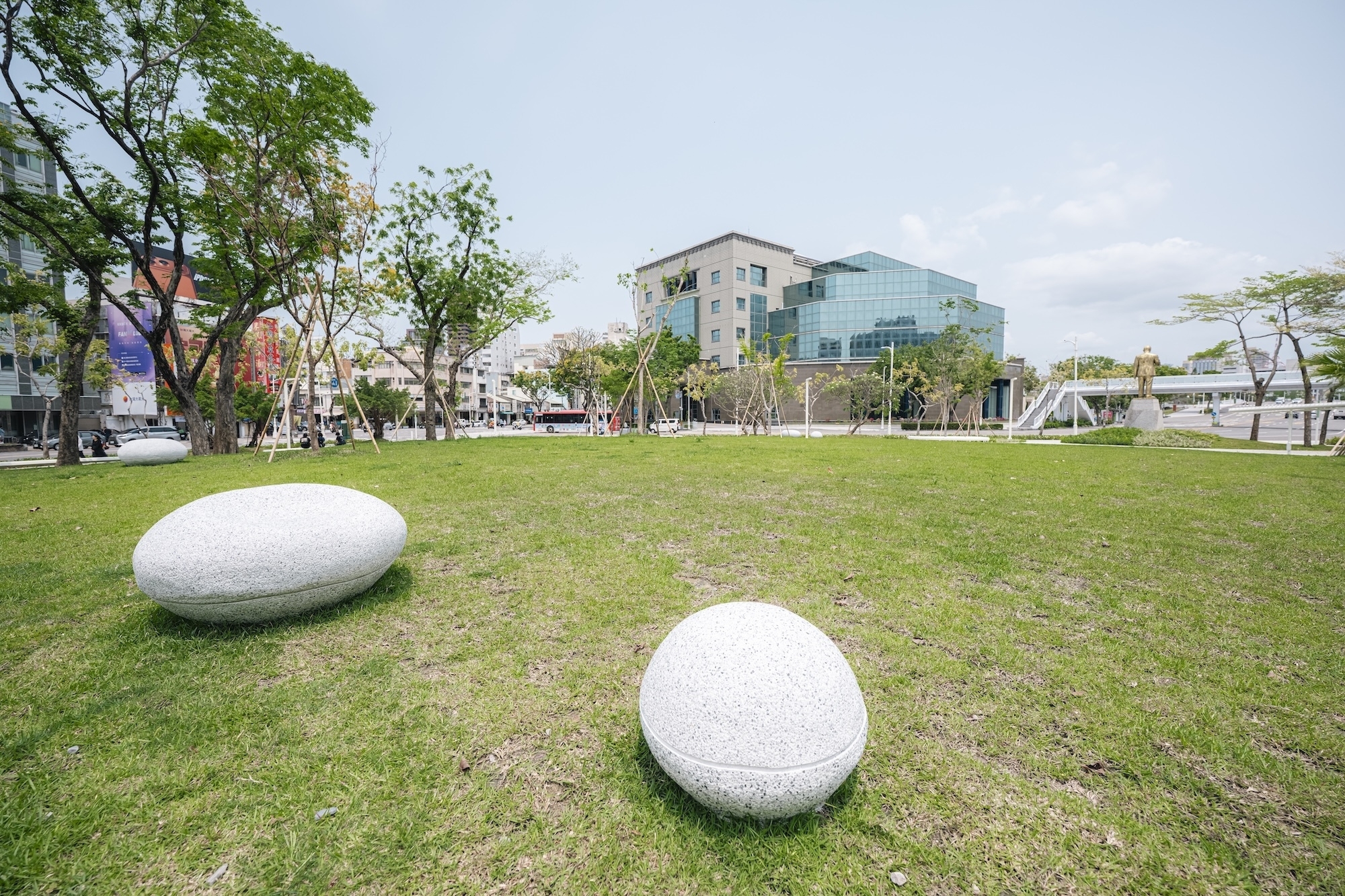 ▲ Oval-shaped stone sculptures scattered across the lawn double as seating.
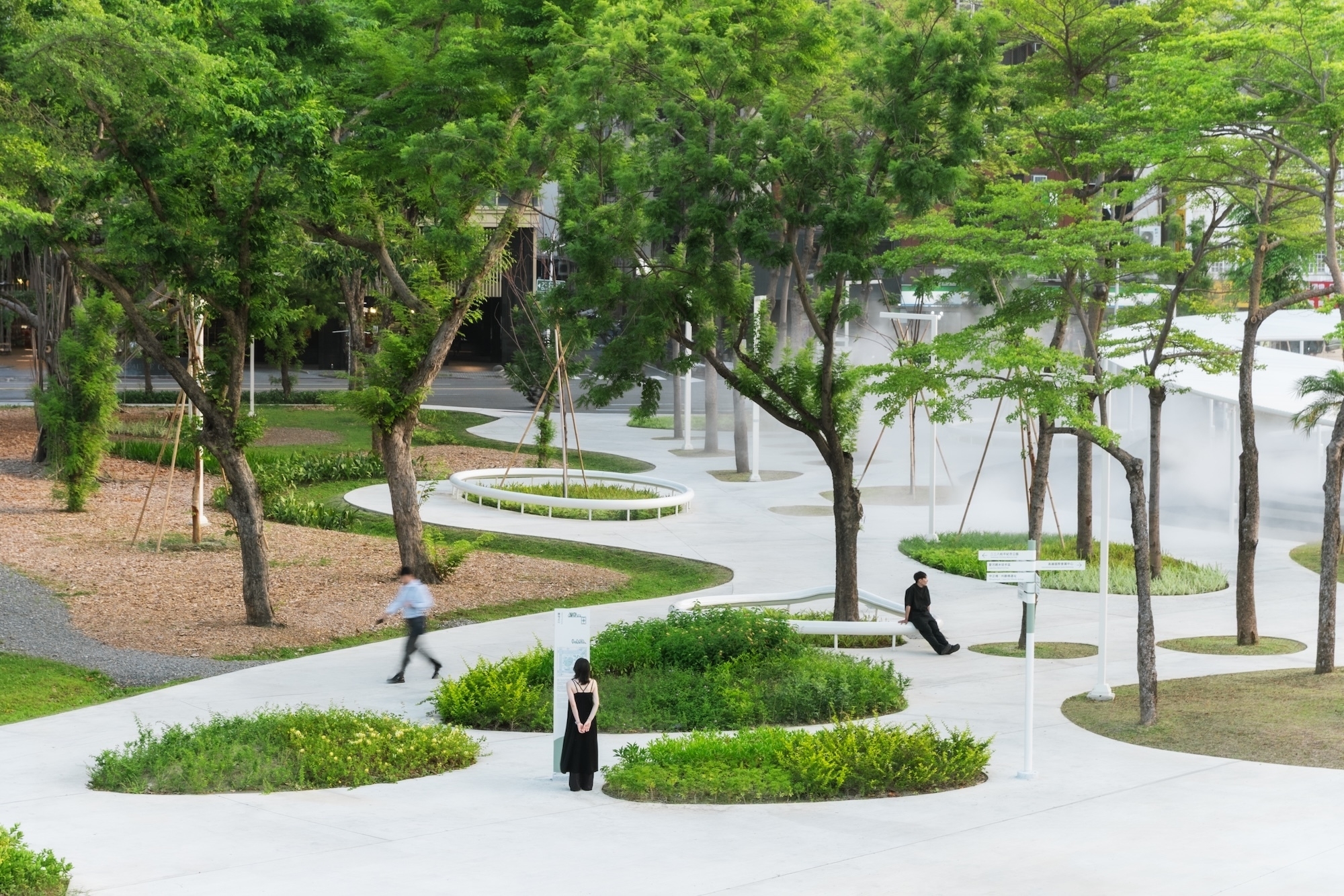 ▲ Old trees including plumeria, phoenix trees, and chinaberry have been preserved in full, blooming in turn with the seasons and bringing ever-changing scenery to Yancheng Civic Plaza.
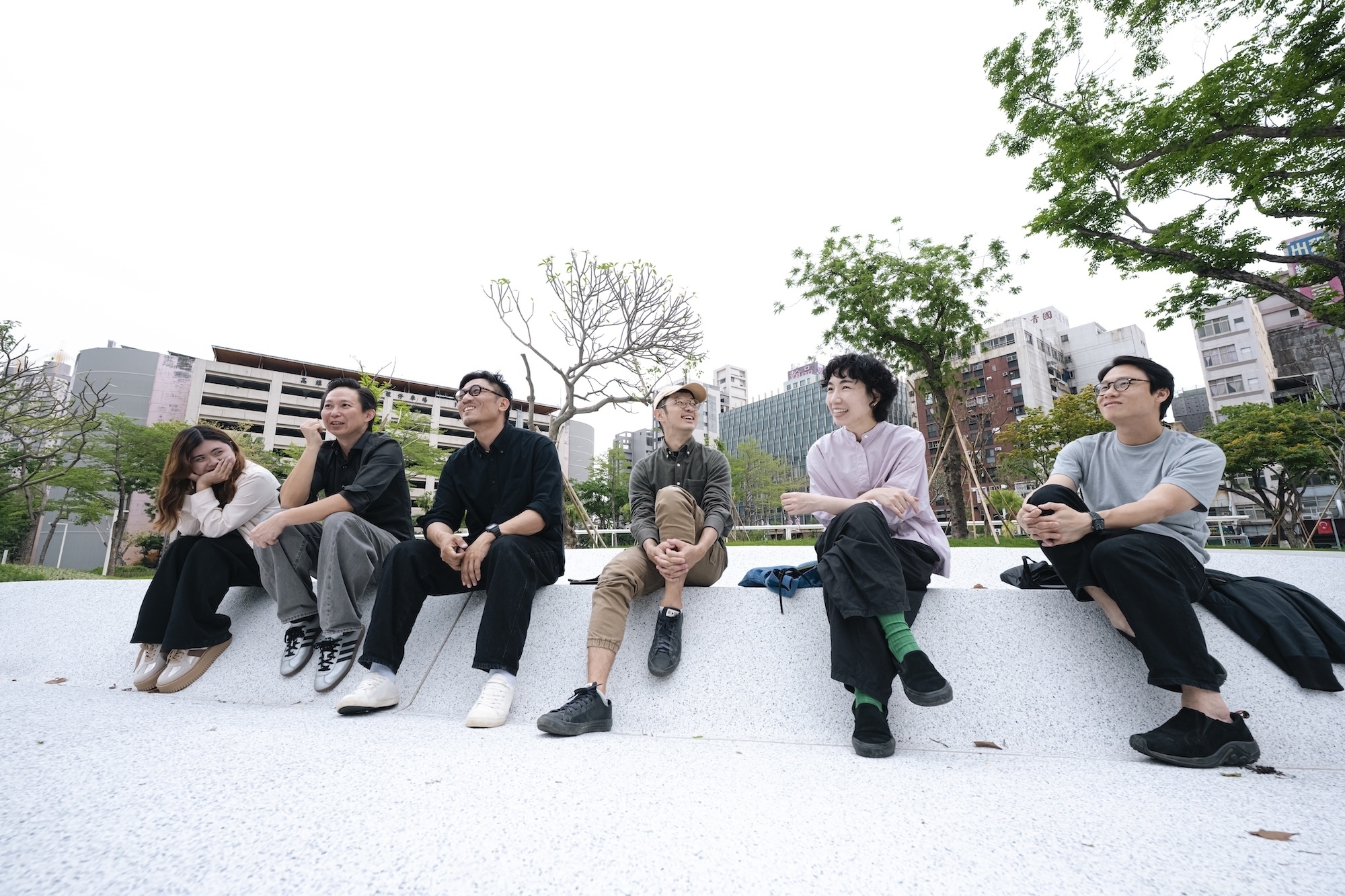 ▲ The team feels that the Design Movement for Public project has been a valuable experience for both the public sector and the design team, allowing both sides to engage in ongoing dialogue and collaboration throughout the process.
Next Steps: Let More of Life's Possibilities Unfold Here
Compared to public works projects of the past led solely by government agencies, the making of Yancheng Civic Plaza took nearly twice as long — from preliminary research and design planning through to construction, the overall timeline expanded significantly. Deputy Director Lo noted that the Urban Aesthetics Plan required the design team not only to gather local input, but to deeply examine the site's history and environmental dimensions. Though more time-consuming than before, the research outcomes were far more attuned to residents' actual needs and helped the public sector envision new possibilities. "The Yancheng Stroll Plan is one example — it reminded us that there's still much more we should keep improving."
Because the site is not managed solely by the Parks Office, coordination across multiple agencies overseeing different public facilities proved to be one of the biggest challenges of the renovation. The team discovered upon entering the site that it housed a bus stop, YouBike stations, Taiwan Power and water company infrastructure, and more — each under different jurisdictional responsibilities. Coordination in the early stages alone took considerable time, with the design continuously adjusted and refined to better reflect real-world conditions.
On the day the corrugated iron fence came down, many residents walked into Yancheng Civic Plaza — Dr. Shen among them. He could barely wait to share the news with family and friends, feeling that the redesigned space was far more inviting for lingering, strolling, and exercising, and that it allowed local residents to rediscover this place. Deputy Director Lo believes this renovation marks a meaningful starting point: "This will become a model for how public spaces can transform the lives of residents and the spirit of the city."
The design team hopes Yancheng Civic Plaza will go on to carry even more possibilities. Beyond serving as a place for everyday relaxation, the plaza has potential to host diverse activities in the future — such as connecting with the Xinle Street New Year Market or live performances. The team hopes the plaza can become part of residents' daily lives, a place to linger and slow down. "Modern life is full of too much noise," they said. "Everyone is welcome to come here and just be. To find a rare moment of stillness in the city."
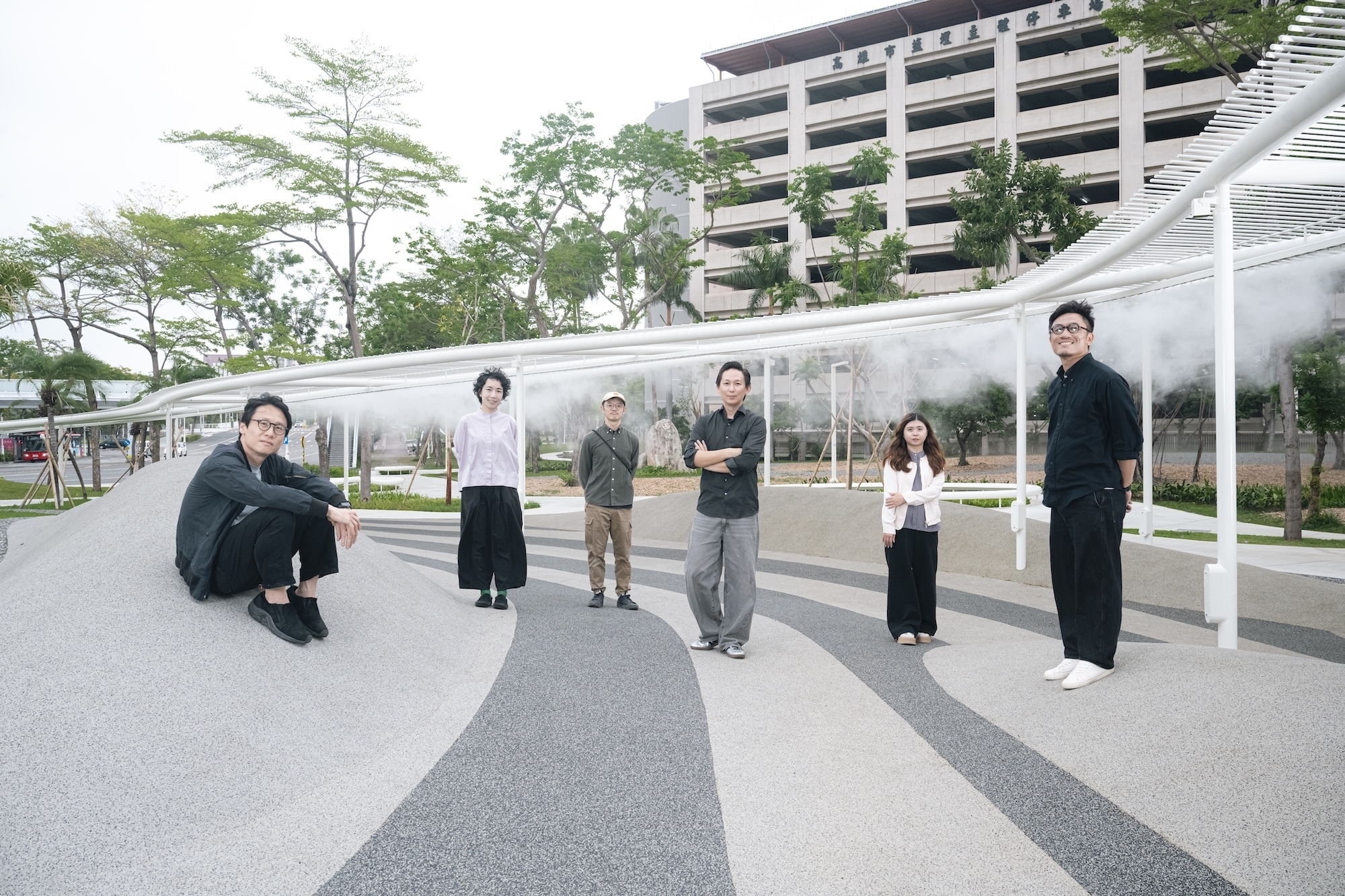 ▲ Project team members Jen Youteng, Yu Szu-an, Tai Ming-chih, Wang Goran, Yang Yuhsuan, and Ku Ta-chi (left to right).
About The Design Movement for Public
Since 2023, the Industrial Development Administration of the Ministry of Economic Affairs has promoted the project executed by the Taiwan Design Research Institute. The program focuses on small-scale public works projects under NT$50 million, with design planning subsidies up to NT$4.5 million per case.
By integrating cross-disciplinary teams from early-stage research, design thinking, and planning, the program helps public agencies deliver solutions that truly meet people’s needs. Through open calls, government agencies, design teams, and experts co-create together, ensuring aesthetics, function, and user experience are considered in every project.
The project is not merely about renovation—it uses design as a tool to improve public services, enhance quality of life, and reshape the image of cities, advancing Taiwan toward a people-centered, collaborative approach to public space.
Design Movement For Public