2026 Golden Pin Design Award and Concept Design Award Announce Finalists for "Best Design”
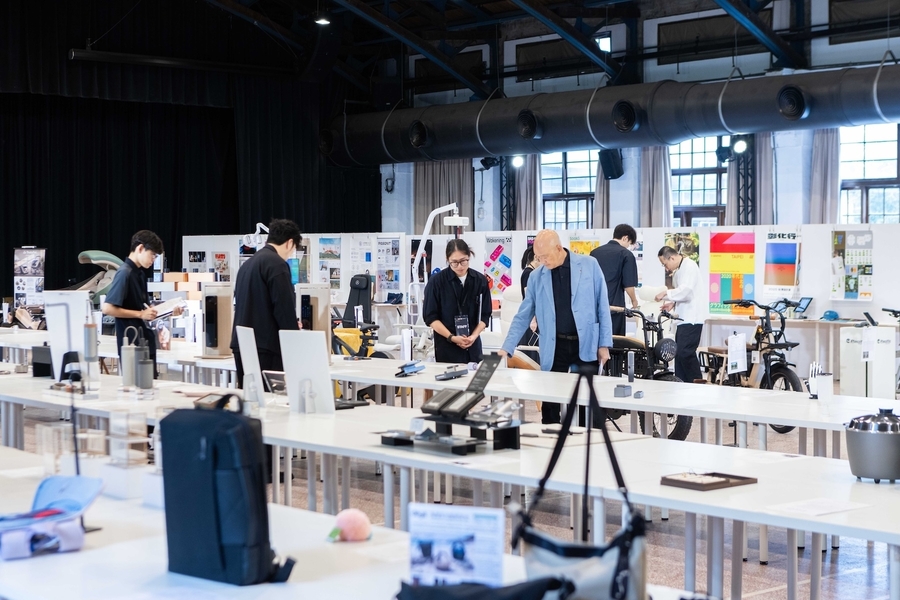
The Golden Pin Design Award and Golden Pin Concept Design Award today announced the finalists for the highly coveted "Best Design of the Year." After intense competition in the Final Selection, 105 exceptional works emerged from 474 Golden Pin Design Mark winners, while 6 visionary concepts advanced to the final stage of the Golden Pin Concept Design Award.
All finalists will be showcased at the annual Golden Pin Design Exhibition. The top honor, "Best Design of the Year," will be officially announced at the grand award ceremony at the Taipei Performing Arts Center on the evening of Thursday, November 26.
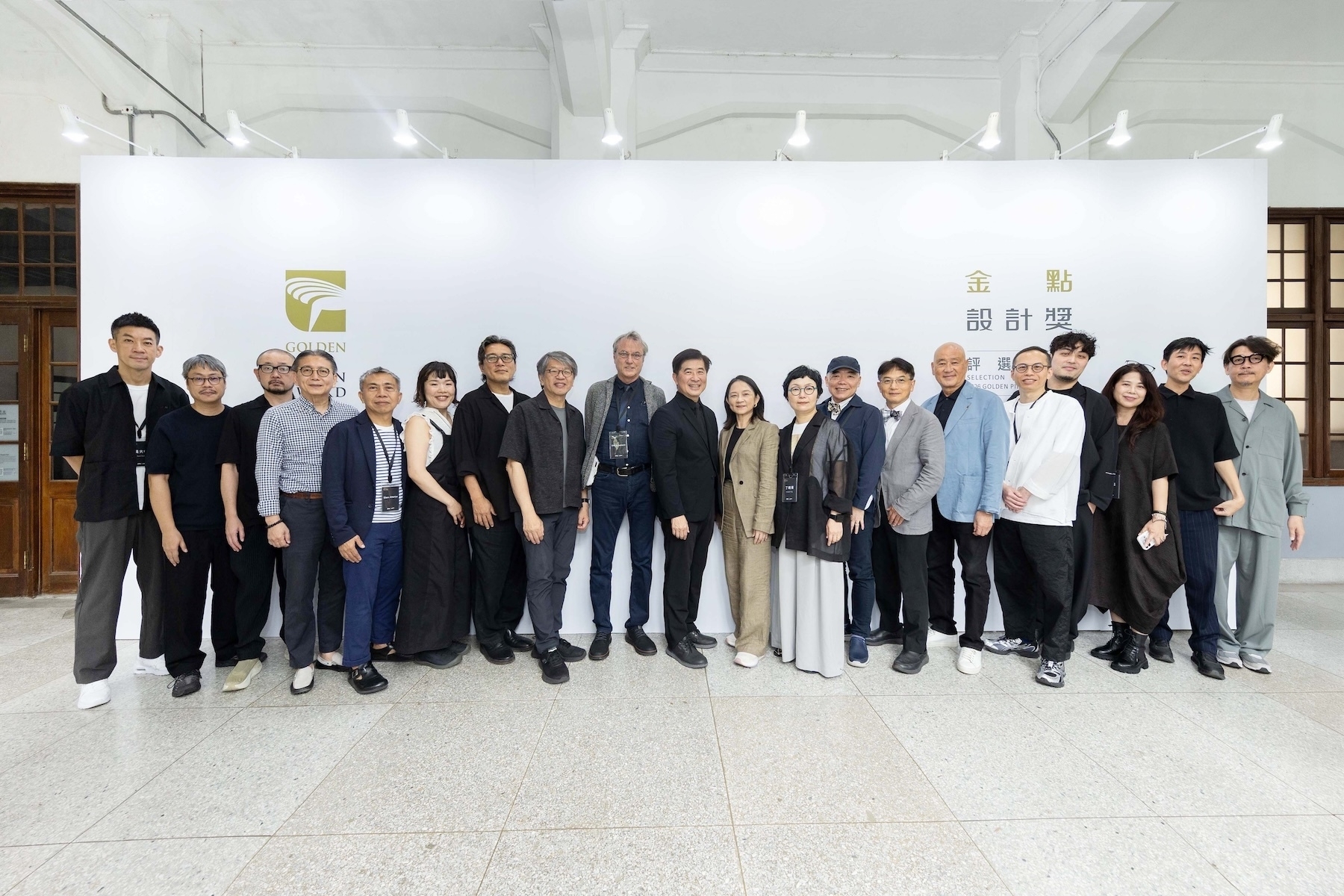
2026 Golden Pin Design Award
This year’s finalists represent 9 regions, including Taiwan, China, Hong Kong, Korea, Japan, Indonesia, Thailand, Malaysia, and Türkiye. Beyond demonstrating breakthroughs in aesthetics and technological innovation, these works respond to critical contemporary issues—ranging from circular sustainability and regional revitalization to elder care and cross-disciplinary integration—vividly illustrating the power of design in driving industrial upgrading and fostering social inclusion.
▌ Highlights of the Best Design Finalists
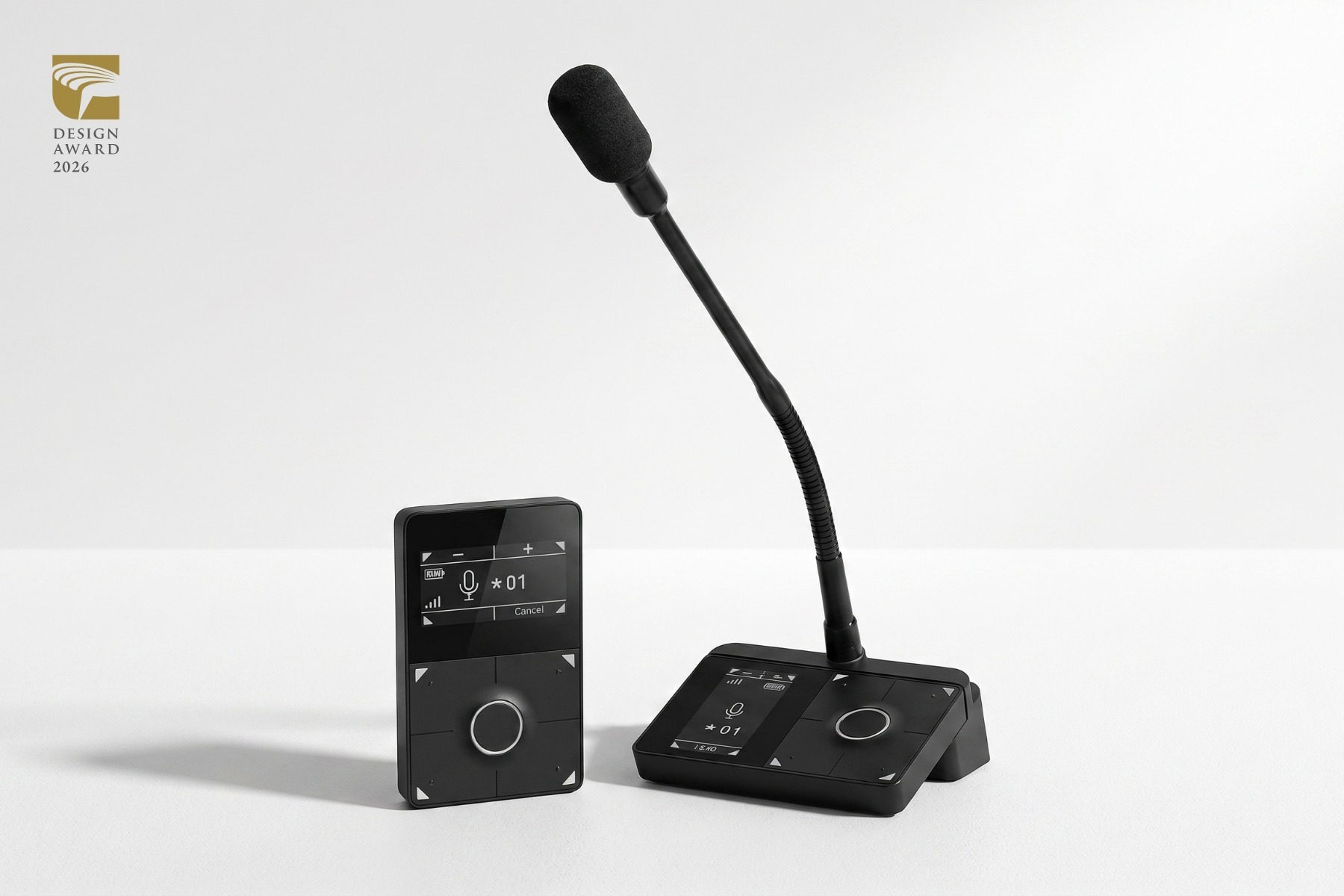
1. T-Flex Wireless Conferencing Microphone
- Category: Product Design
- Region: Taiwan
- Applicant Company: BXB Electronics Co., Ltd.
- Manufacturer / Business Owner / Design Company: BXB Electronics Co., Ltd.
Featuring a magnetic quick-release design, T-Flex enables speakers to seamlessly transition between desktop and handheld modes. By integrating stable wireless communication, AI-driven speaker tracking, and military-grade encryption, the system breaks free from cable constraints while ensuring reliable audio-visual synchronization and data security for hybrid collaboration environments.
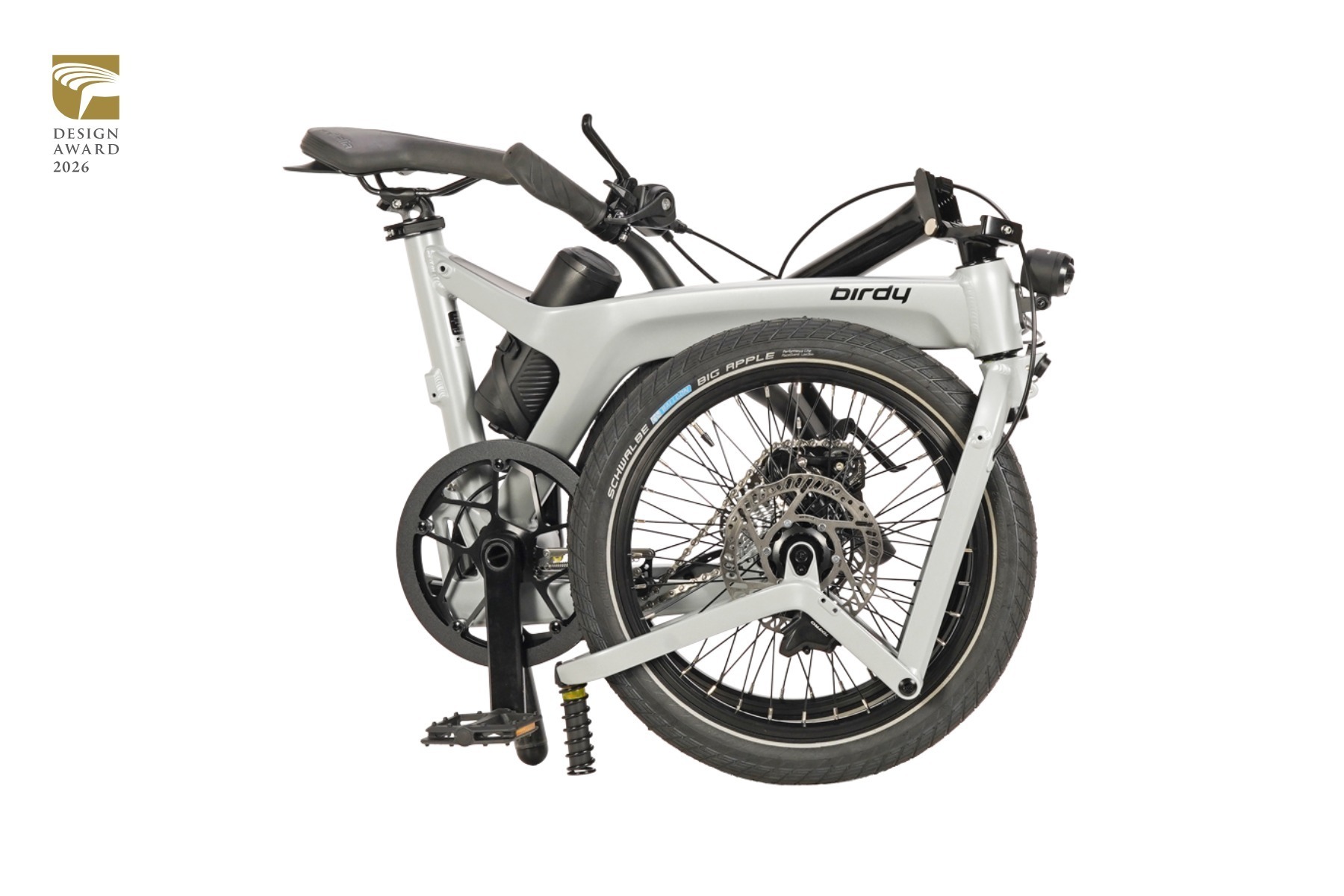
2. E-BIRDY
- Category: Product Design
- Region: Taiwan
- Applicant Company: Pacific Cycles, Inc.
- Manufacturer / Business Owner: Pacific Cycles
- Design Company: Section Zero
E-BIRDY evolves the signature BIRDY folding architecture into an electrified mobility platform. The design integrates a hydroformed frame, a full suspension system, and a lightweight e-assist technology into its compact structure. By balancing smooth power delivery with agile handling, E-BIRDY achieves extended battery range without compromising portability, delivering a versatile solution for both daily urban commuting and outdoor exploration.
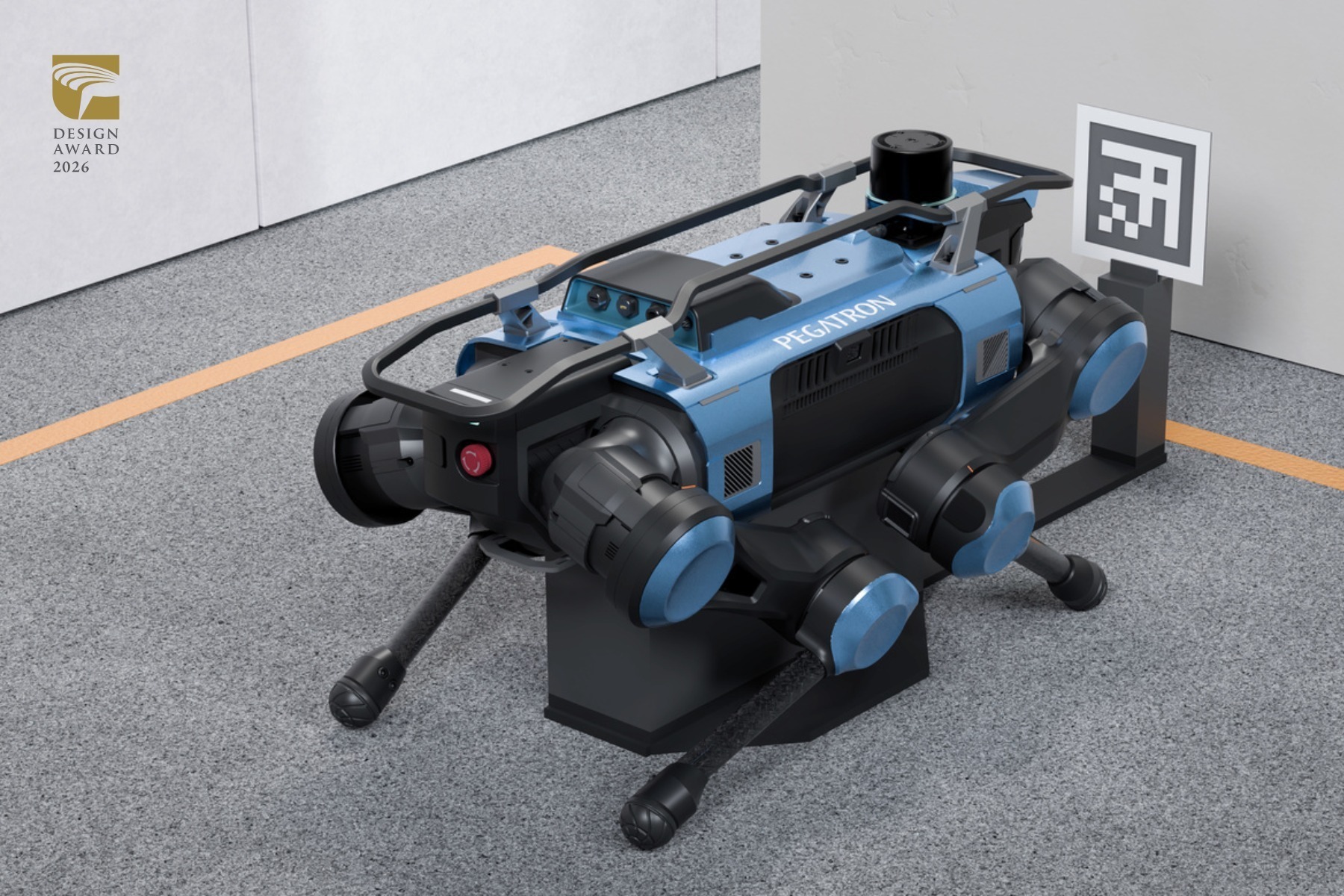
3. Simba II Modular Quadruped Robot
- Category: Product Design
- Region: Taiwan
- Applicant Company: PEGATRON Corporation
- Manufacturer / Business Owner: PEGATRON Corporation
- Design Company: PEGA Design
Engineered for harsh environments, SIMBA II is a modular quadruped robot, featuring a symmetrical body with four interchangeable, quick-release legs to streamline maintenance and reduce component costs. A ring-shaped top rack serves as a payload expansion interface, collision bumper, and carrying handle. Featuring a robust, waterproof design, it excels in diverse applications ranging from industrial inspection to emergency rescue.
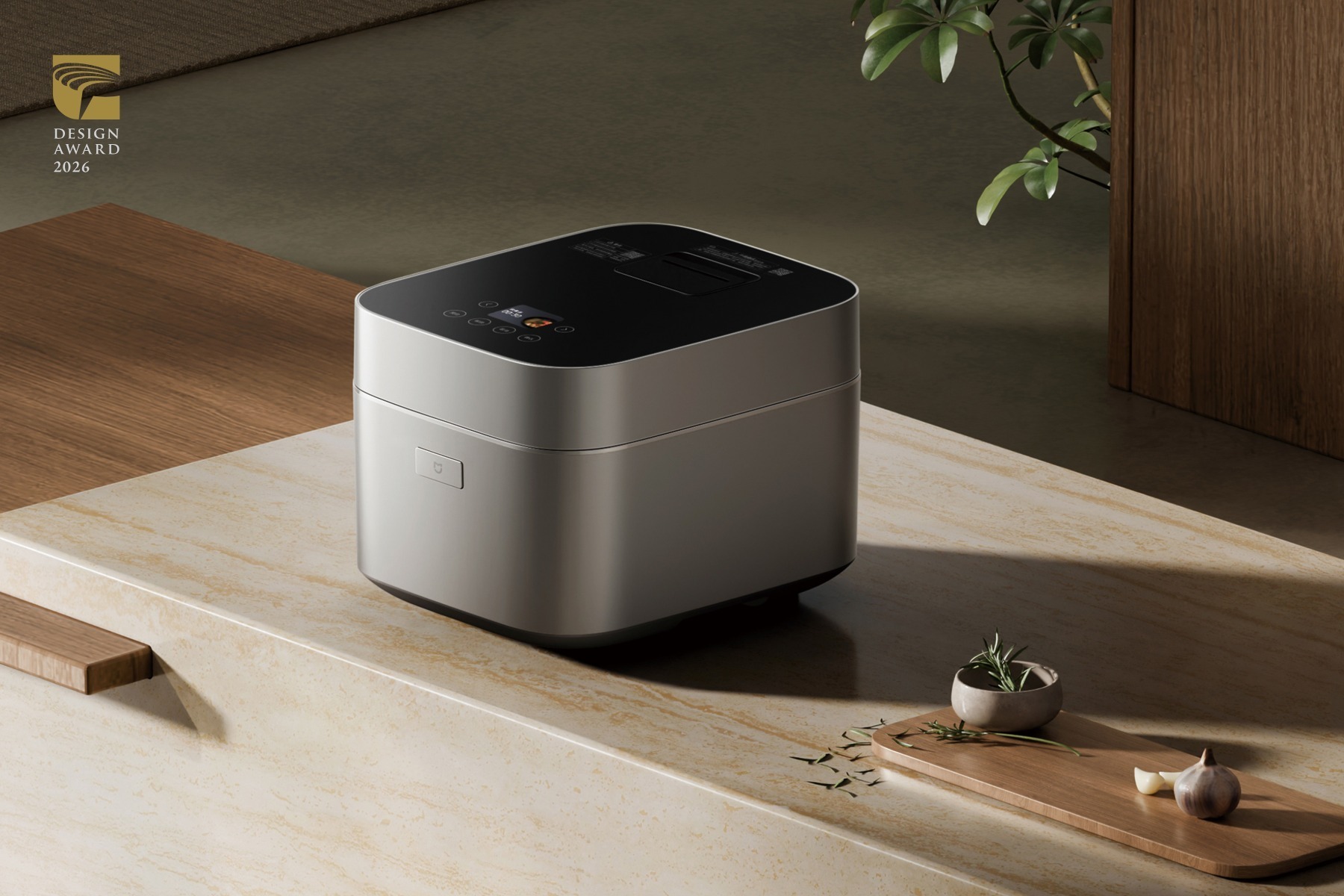
4. Mijia Smart Variable-pressure IH Rice Cooker 3L&4L
- Category: Product Design
- Region: China
- Applicant Company: Chunmi Technology (Shanghai) Co., Ltd.
- Manufacturer / Business Owner: Beijing Xiaomi Mobile Software Co., Ltd.
- Design Company: Beijing Xiaomi Mobile Software Co., Ltd. & Chunmi Technology (Shanghai) Co., Ltd.
Featuring a rounded-square body with a silver-and-black finish, this smart rich cooker integrates a tempered glass top panel and matte casing for easy cleaning. It incorporates a fluoride-free titanium inner pot, a 14-minute quick-cook function, and app-based smart controls. A large display screen with nine texture presets offers accessible, intuitive operation across diverse user demographics.
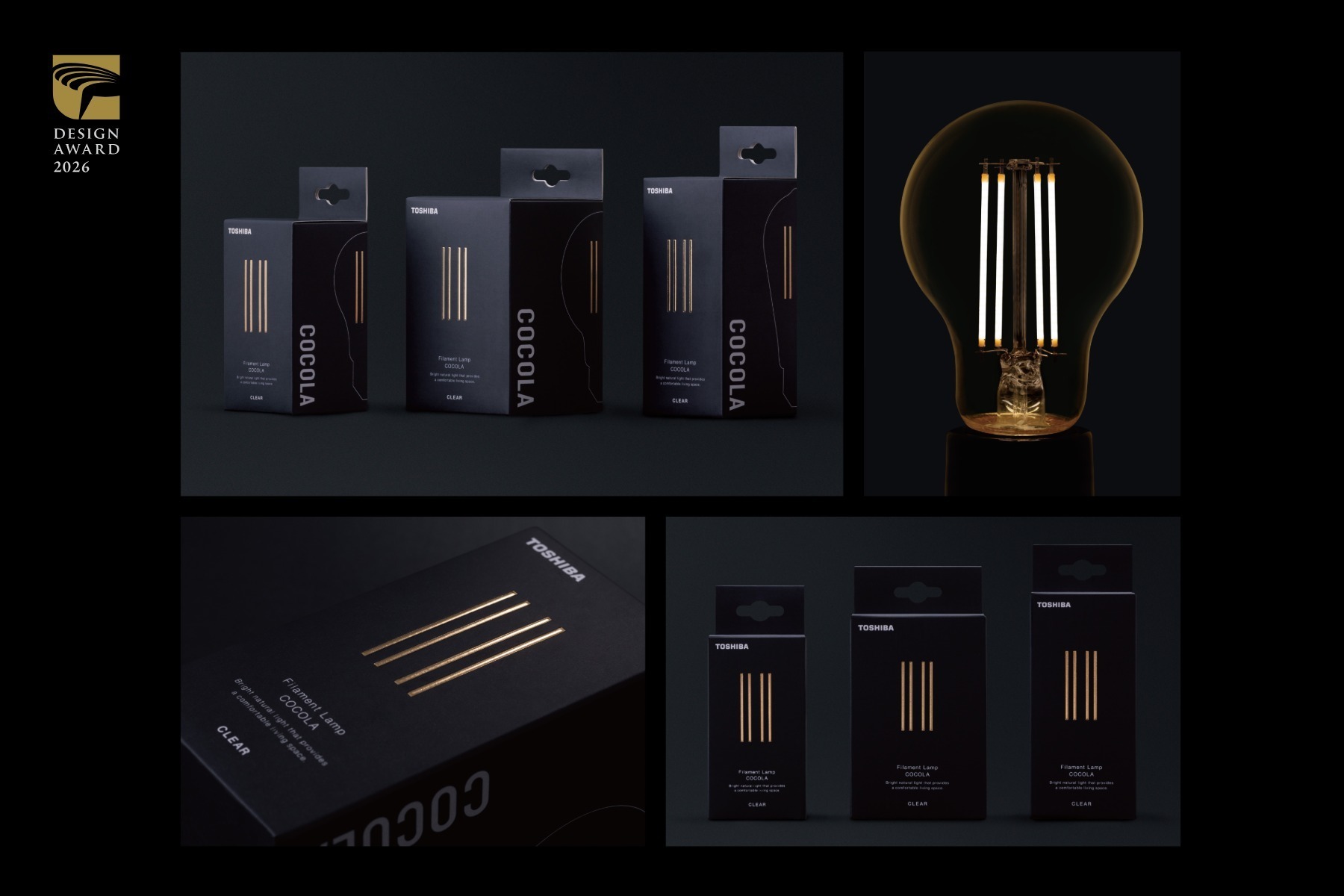
5. COCOLA
- Category: Communication Design
- Region: Japan
- Applicant / Design Company: cosmos inc.
- Manufacturer / Business Owner: NVC Lighting Japan
Designed for a dimmable LED filament bulb series available in three shapes, the packaging and visual identity depart from traditional retail designs crowded with technical specifications. The visual approach centers on the product’s core feature—its slender LED filaments—using gold foil stamping and embossing on a matte black surface to depict four glowing filaments, cleanly communicating product attributes with understated elegance and aesthetic harmony.
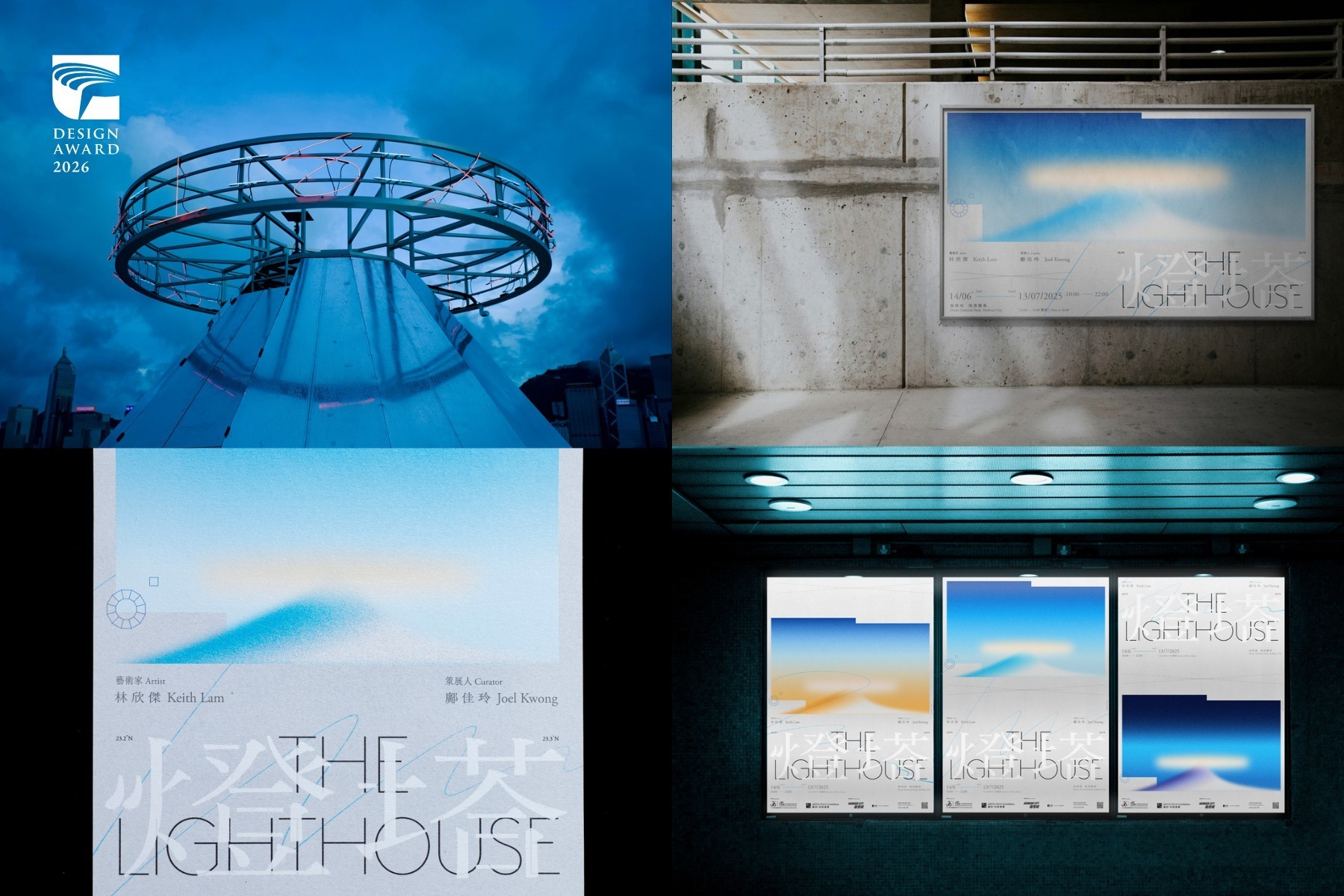
6. Lighthouse
- Category: Communication Design
- Region: Hong Kong
- Applicant / Design Company: for&st
- Manufacturer / Business Owner: The Hong Kong Arts Development Council
Designed for a public art installation along Victoria Harbour, the visual identity translates the concept of urban lighthouses into an abstract graphic system representing guidance and city memory. The accompanying promotional print incorporates custom micro-perforations arranged in Morse code; when held up against ambient city lights, the perforations allow light to pass through to project the word "H.O.M.E.", creating an interactive connection between urban space, light, and emotional belonging.
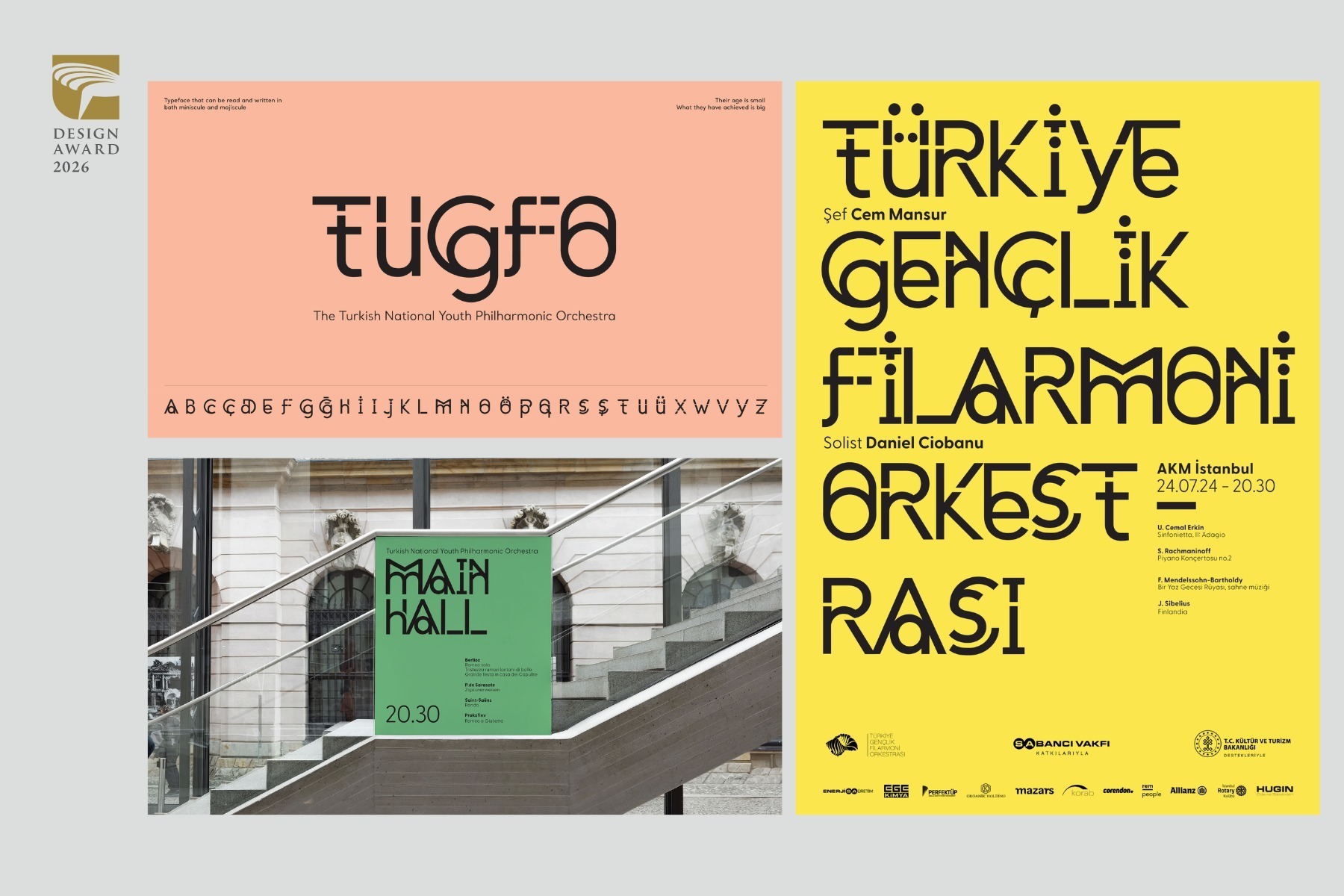
7. TUGFO 24
- Category: Communication Design
- Region: Türkiye
- Applicant / Design Company: Orbit
- Manufacturer / Business Owner: Sabancı Foundation
Created for the Turkish National Youth Philharmonic Orchestra (TNYPO), composed of musicians aged 15 to 21, the custom typographic identity combines lowercase and uppercase letterforms within a unified system. By integrating minuscule and majuscule structures, the design reflects the dynamic balance between youthfulness and technical mastery. Adaptable across print, digital, and motion applications, the typography endows the classical ensemble with a contemporary visual voice.
8. Yeongwol Typeface
- Category: Communication Design
- Region: Korea
- Applicant / Design Company: Gangwon Institute of Design Promotion (GIDP)
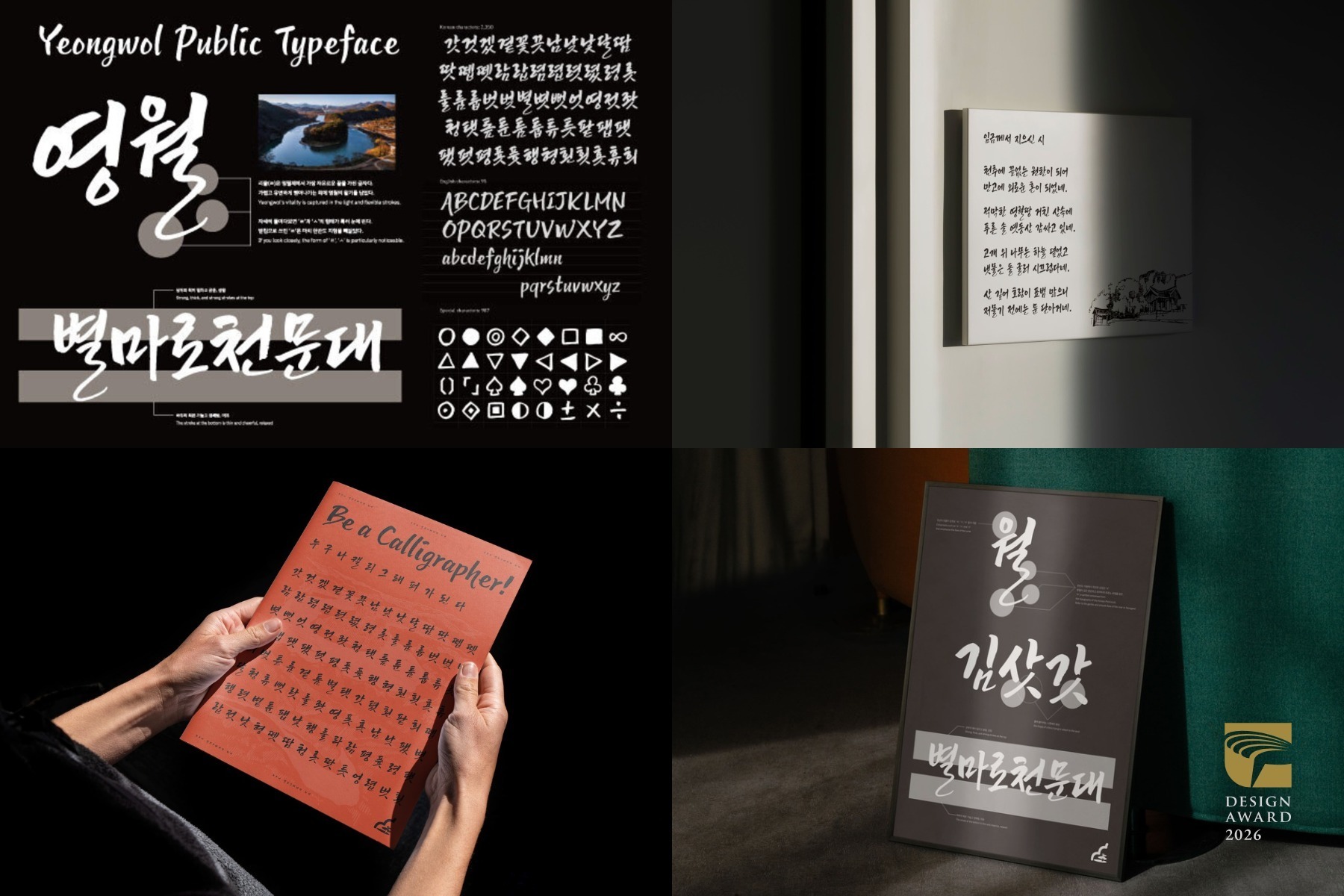
Yeongwol-gun established a design management system by promoting the local unique typeface "Yeongwol" typeface as a city brand management strategy. By opening a public typeface that embodies local natural scenery and identity in visual language for free, it has contributed to improving local brand value and innovation in public communication by downloading and utilizing more than 190,000 cases.
9. Dib Bangkok
- Category: Spatial Design
- Region: Thailand
- Applicant Company: Dib Bangkok
- Manufacturer / Business Owner: Dib Bangkok
- Design Company: WHY Architecture
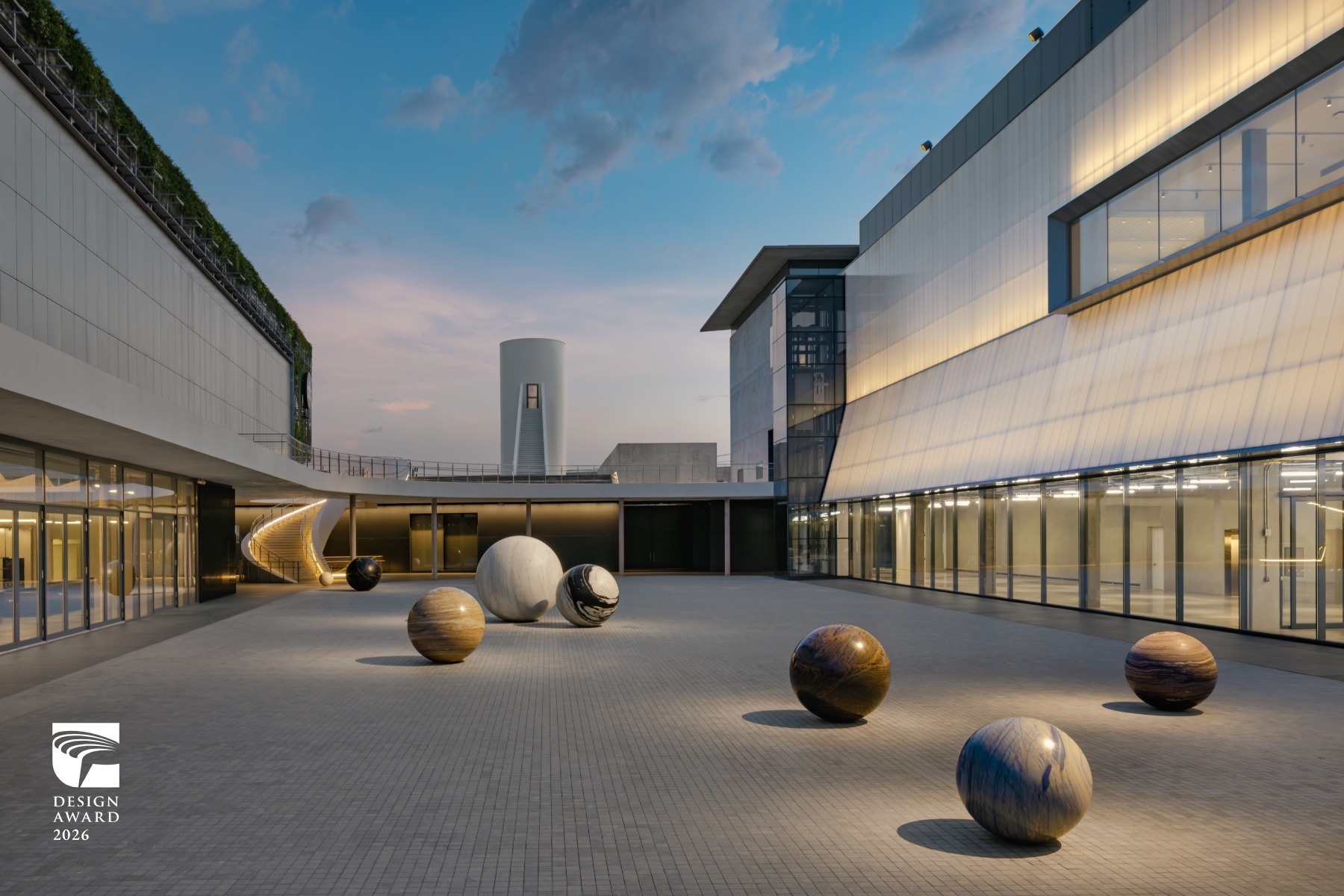
Transforming a 1980s steel warehouse into a contemporary art museum, the design applies an "acupuncture architecture" approach, using precise spatial interventions to preserve and adapt the industrial structure. Reshaped into a U-shaped courtyard compound, Dib Bangkok moves from raw concrete galleries to white-walled collections and skylit upper rooms with a sawtooth roof that brings in diffused northern light, becoming a landmark of scale and light.
10. Ojiya City people, town, culture co-creation base hontoka.
- Category: Spatial Design
- Region: Japan
- Applicant Company: Ojiya City
- Manufacturer / Business Owner: Ojiya City
- Design Company: Ojiya City, ACADEMIC RESOURCE GUIDE, Inc., Kenya Hiraga, akihisa hirata architecture office, INTERNATIONAL DEVELOPMENT CONSULTANTS CO., LTD., AFFORDANCE.inc & SCIVONE, LLC
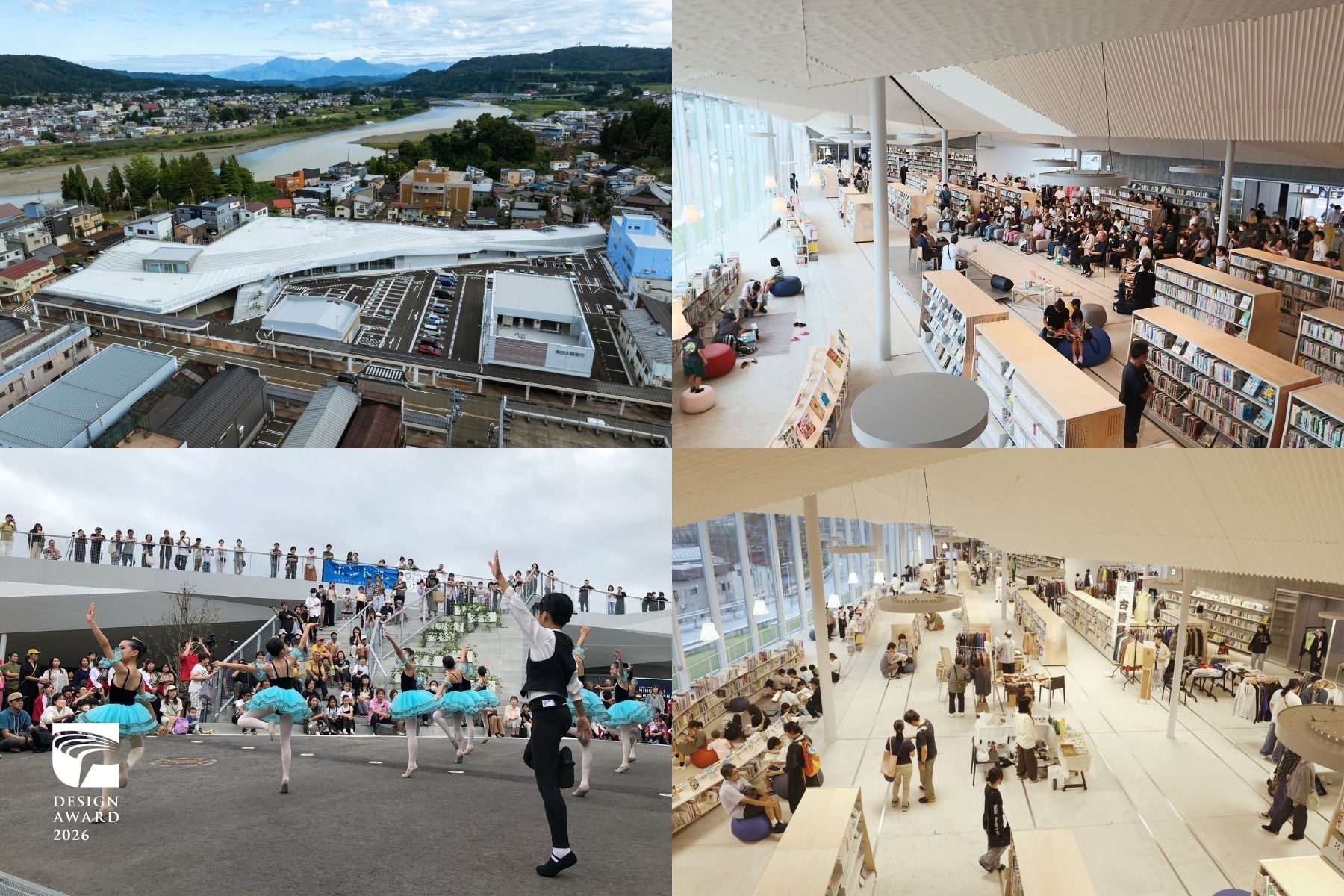
Developed on the site of a former hospital to revitalize downtown Ojiya, this multifunctional complex relocates an aging public library to establish a civic hub centered on community co-creation. Designed through extensive dialogue with local stakeholders, the project unifies architecture, information, and service design across public and private sectors, creating a flexible space for reading, learning, and daily community interaction.
11. Kampoong Guha
- Category: Spatial Design
- Region: Indonesia
- Applicant / Design Company: RAW Architecture
- Manufacturer / Business Owner: Realrich Sjarief, Laurensia Yudith
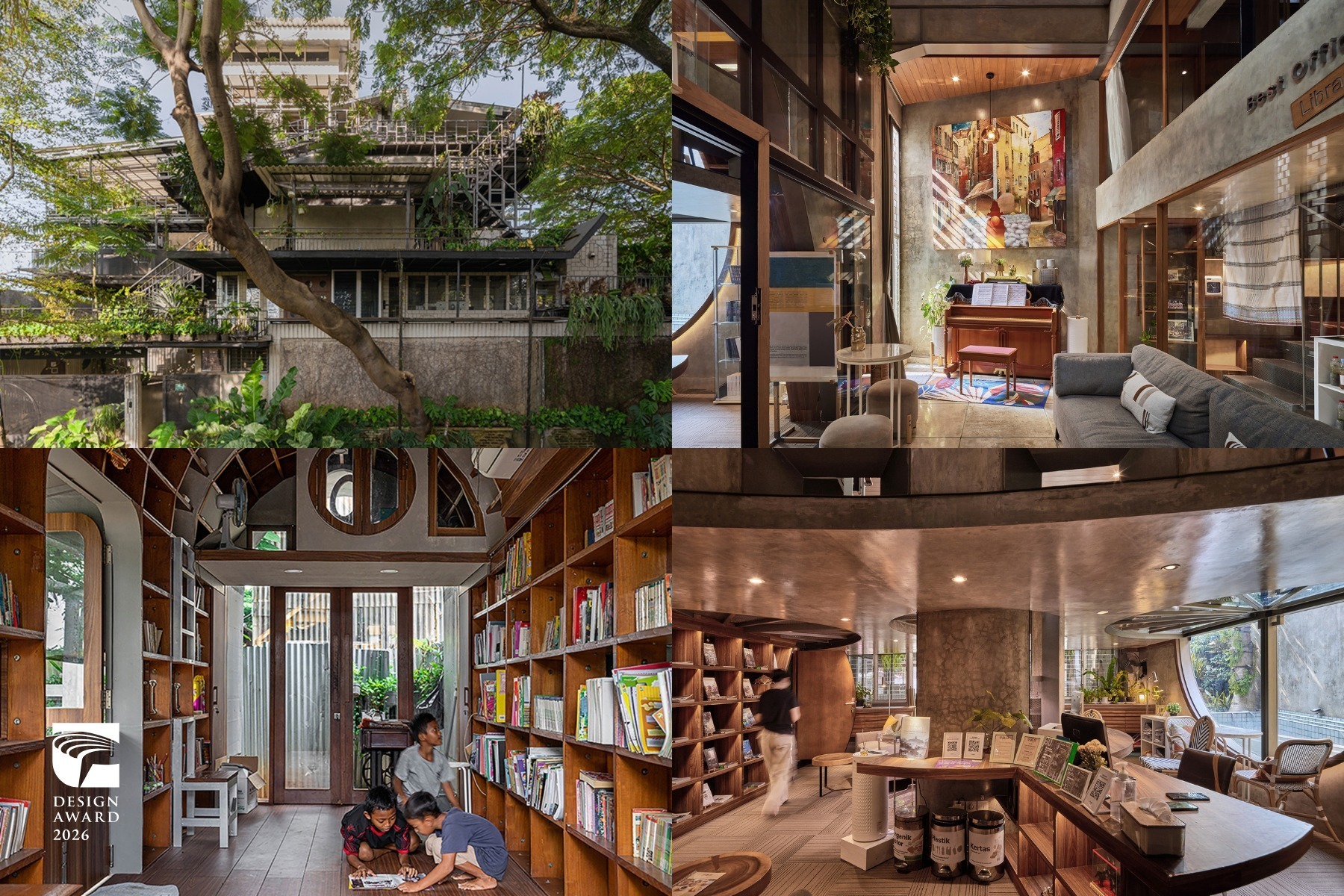
Drawing inspiration from the organic growth and mixed-use typology of traditional Indonesian kampoongs (urban villages), the project evolved over a decade on an 800-square-meter site into a multi-functional community hub. The architecture integrates a public library, architecture studio, craftsman lab, co-working space, and residential quarters within a flexible, multi-layered layout. Combining local low-tech materials—such as bamboo, wood, and recycled tiles—with industrial steel and concrete, the design demonstrates a resilient model for urban density that blurs the boundaries between public and private domains.
12. Cha tzu tang–Taiwan Camellia Oil Lab: A Regenerative Place–Making Model for Rural Revitalization
- Category: Integration Design
- Region: Taiwan
- Applicant / Design Company: InFormat Design Curating
- Manufacturer / Business Owner: Cha tzu tang / ORIENTEA ENTERPRISE CO., LTD.
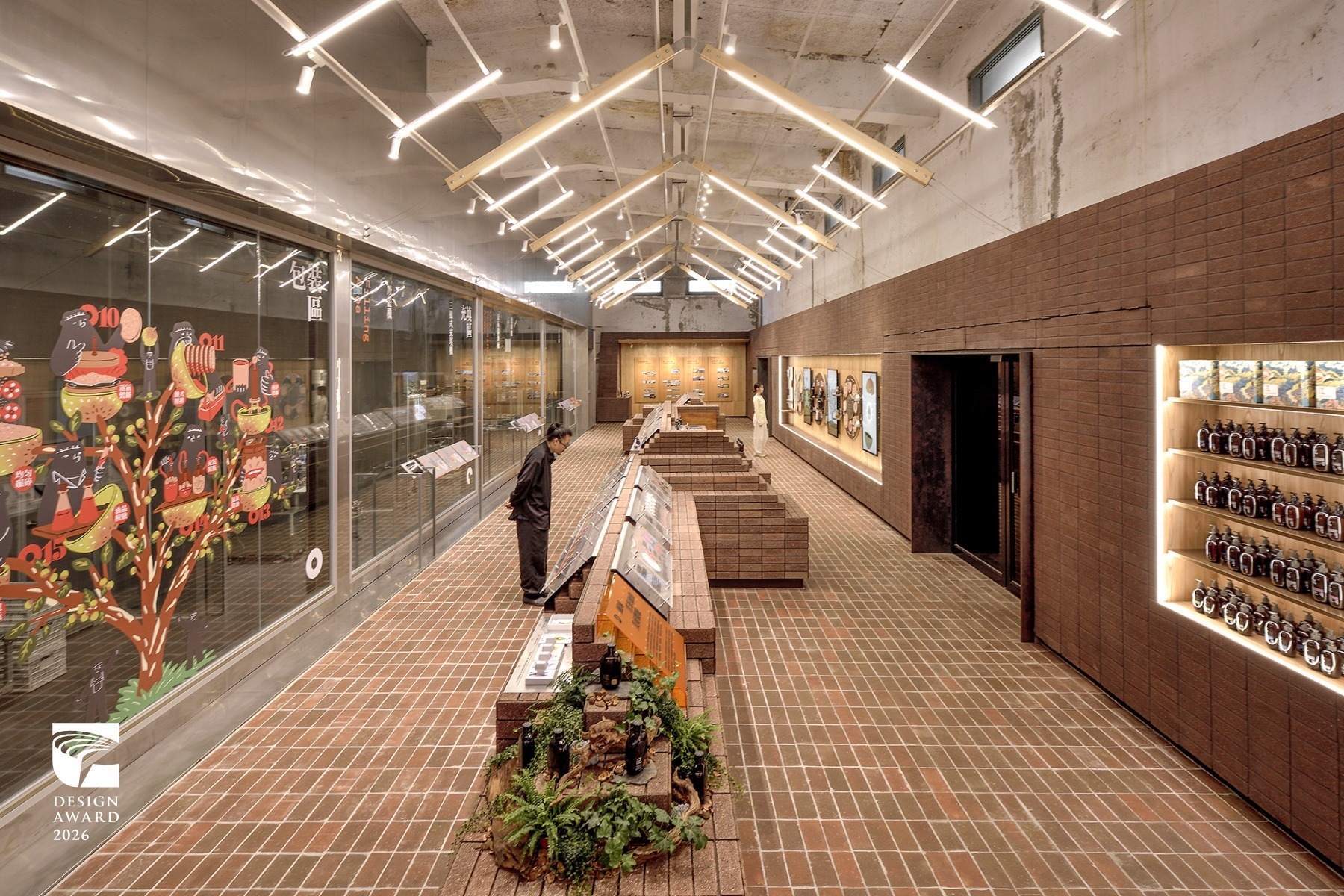
Located in Nanao, Yilan, the project transforms a camellia oil production facility into a public platform for regional revitalization and environmental education. Integrating architecture, exhibition design, and brand identity, the facility translates the lifecycle of camellia oil—from cultivation to pressing—into a physical journey by incorporating transparent production processes directly into the exhibition layout. By connecting agricultural processing with community participation, the project establishes a regenerative place-making model for local industrial upgrading.
13. Reposaku
- Category: Integration Design
- Region: Japan
- Applicant Company: Ezowin Inc.
- Manufacturer / Business Owner / Design Company: Ezowin Inc.
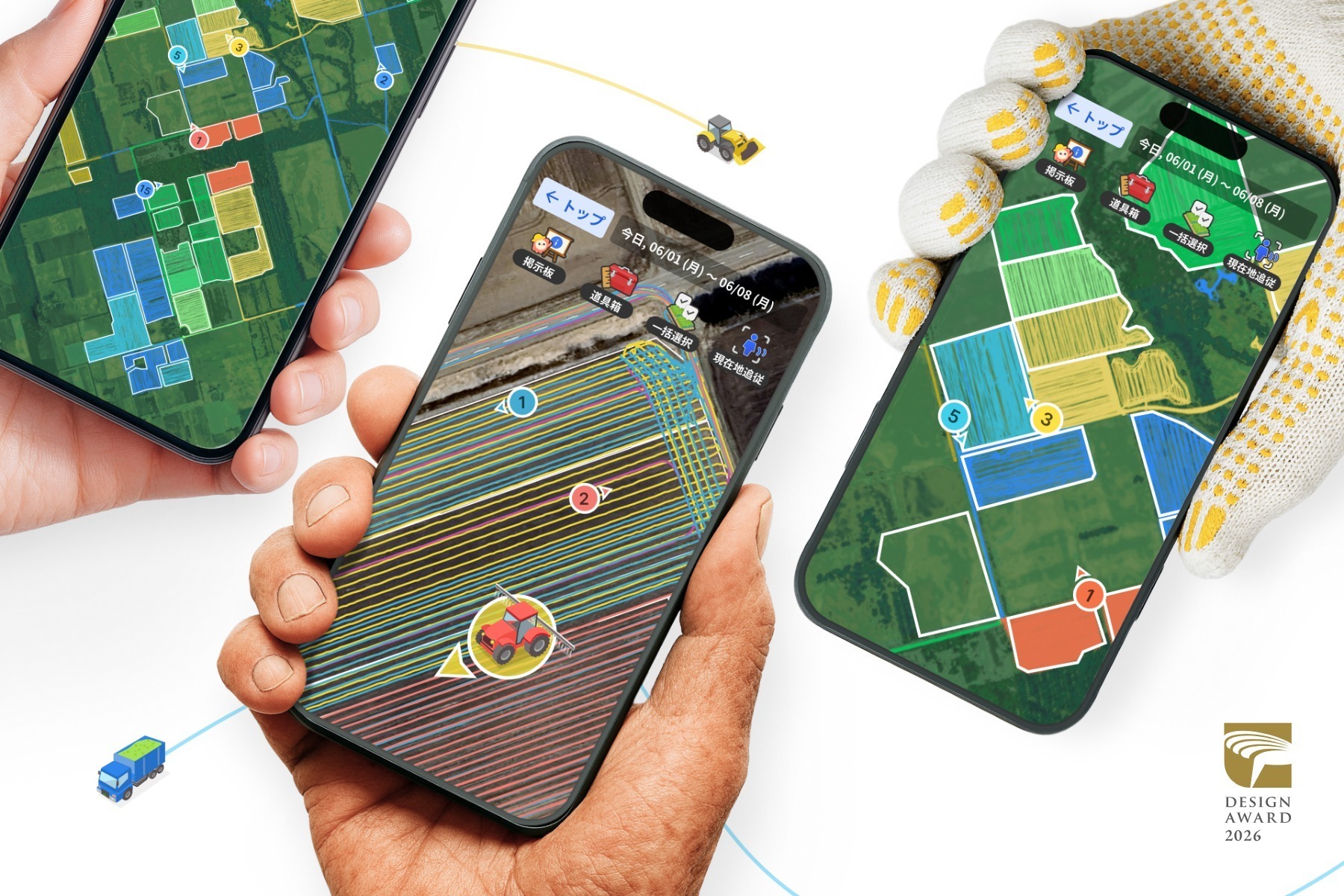
Designed to preserve veteran farming expertise and address agricultural labor shortages, Reposaku is a web application that visualizes high-precision agricultural vehicle trajectories. By pairing a plug-and-play GPS logger featuring a 12-centimeter margin of error with an intuitive visual interface, the system digitizes farmers' tacit knowledge into actionable operational data, improving field efficiency while facilitating skills transfer for future automated farming.
▌ Final Selection Jury’s Comments
In the Product Design category, German industrial designer Dirk Schumann highlighted that many of this year’s shortlisted entries go beyond isolated technical features, seamlessly integrating innovative technologies into architectural, spatial, and diverse lifestyle contexts to demonstrate exceptional cross-disciplinary synergy.
Ningning Li, Founder and Design Director of ViStrat Design Consulting, noted that alongside the increasingly mature application of frontier technologies like robotics and AI, designers are successfully revitalizing established product categories. Through structural refinements and aesthetic re-engineering, they uncover subtle, previously unaddressed needs, delivering multi-scenario solutions with refined human-centric care.
Regarding the Integration Design category, Japanese urban designer Yuki Uchida emphasized that great design transcends superficial visual polish by discerning a project’s underlying context to address its core essence. She particularly commended entries that systematically untangled local industrial and cultural heritage, transforming fragmented regional resources into cohesive experience systems.
Navigating today’s saturated communication environment, Thai designer Siam Attariya observed in the Communication Design evaluation that whether guiding the public to rediscover traditional craftsmanship or reconnecting with local culture, exceptional design must master three core elements: clear information delivery, a distinct visual identity, and compelling resonance that inspires public participation—key criteria shaping his selection for the "Best Design of the Year."
Evaluating the Spatial Design category, C. David Tseng, University Chair Professor in the Department of Architecture at National Cheng Kung University (NCKU), emphasized evaluating how spaces engage in meaningful dialogue with local climate, terrain, and cultural contexts. He also focused closely on sustainable material applications, construction craftsmanship, functional performance, comfort, and user experience, ensuring a multi-dimensional assessment of design value.
2026 Golden Pin Concept Design Award
Dedicated to discovering bold, forward-thinking proposals, the Golden Pin Concept Design Award serves as a platform for emerging designers and startups to transform ideas into reality.
This year’s competition drew innovative entries from 21 regions worldwide. A total of 31 projects were awarded the Golden Pin Concept Design Mark, with 11 of them advancing to the Final Selection to compete for the top three "Best Design of the Year" honors.
The 6 finalists selected during the Final Selection showcase distinct creative approaches, reflecting emerging designers’ keen insights into social inclusion, environmental sustainability, and future lifestyles.
▌ Highlights of the Best Concept Finalists
1. A-aa-i-ii
- Category: Communication Design
- Region: Thailand
- Designer(s): Aree Sangsukiam
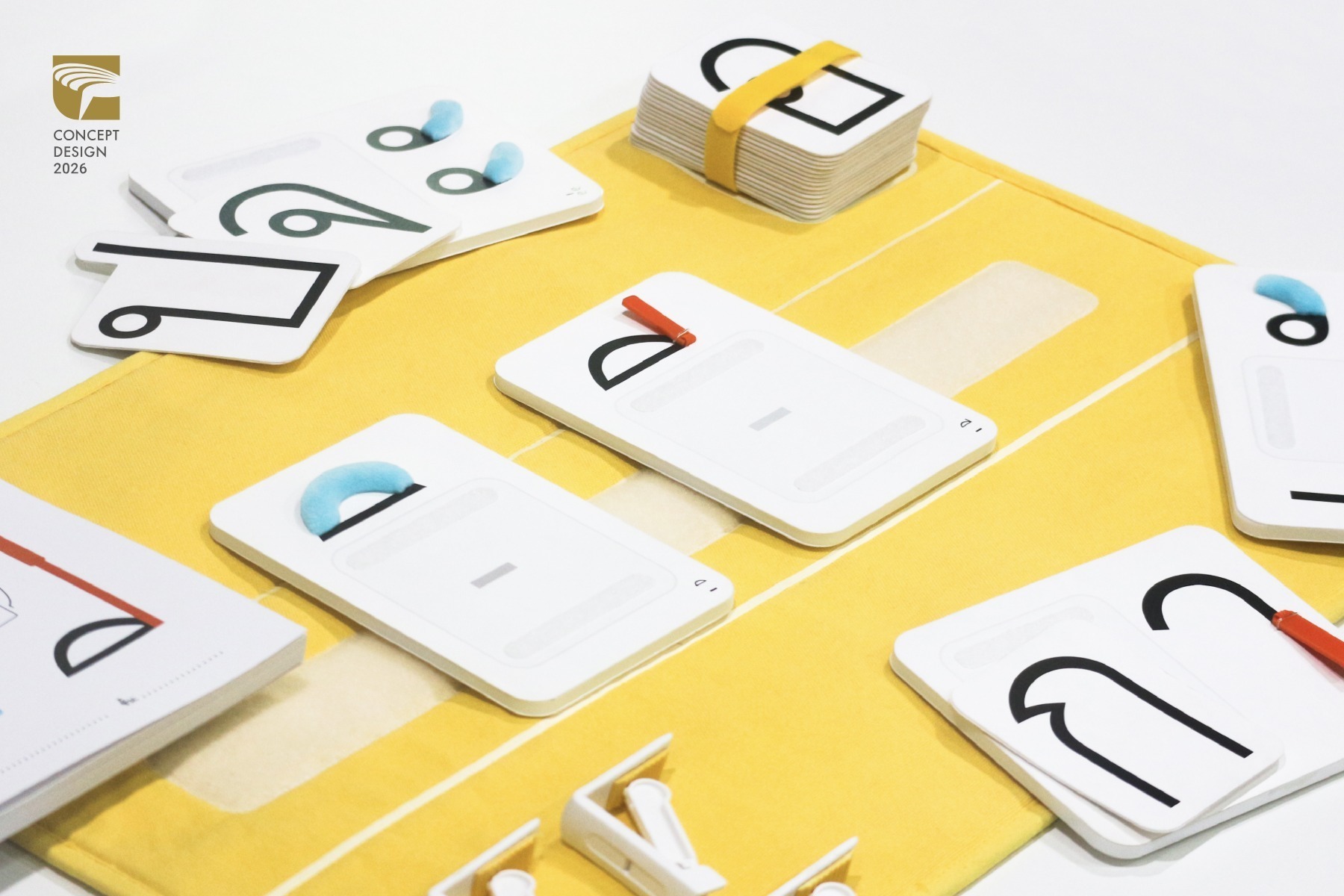
A-aa-i-ii is a set of multi-sensory vowel learning tools designed for Thai primary school students with reading and writing challenges. The tool covers 18 Thai monophthongs and basic words containing them, allowing learners to explore vowel forms and sounds through hands-on interactions. As Thai monophthongs are categorized into vowels with short and long sounds, the tool is designed with systematic pressing and pulling interactions to represent short and long vowel groups, helping learners understand vowel sounds and distinguish between similar short and long vowel pairs. An accompanying exercise book further supports reading and writing practice after using the learning tool.
2. WHALE CARE: Turning & Temperature Control Assistive Device
- Category: Communication Design
- Region: Taiwan
- Designer(s): Pin Han Wang, Yung Hsin Chan
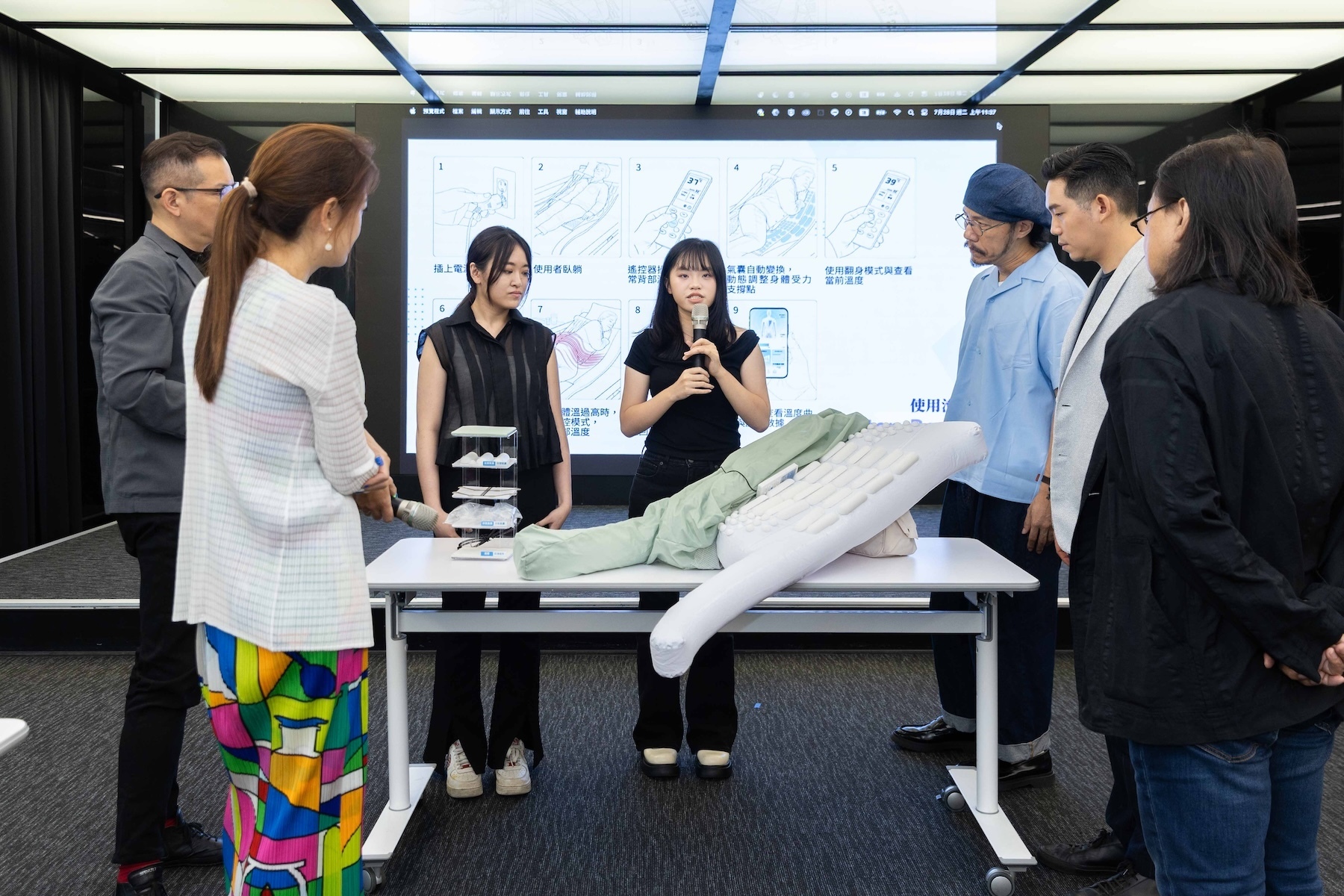
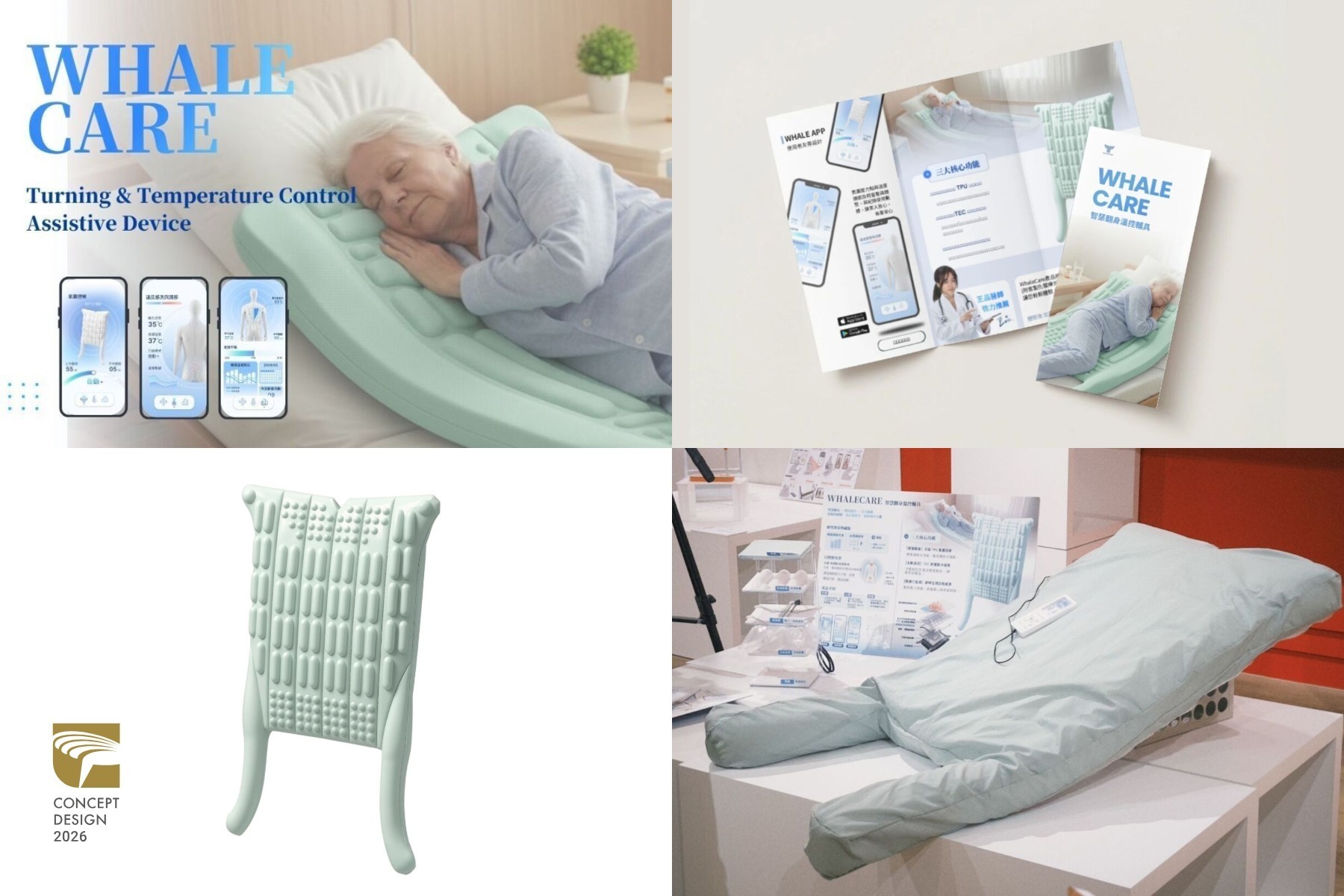
Designed for long-term bedridden seniors, this assistive device addresses pressure ulcer (bedsore) risks associated with prolonged bed rest. The system utilizes multi-zone TPU airbags to dynamically adjust support points through pressure variation, while incorporating a thermoelectric cooling (TEC) system to prevent heat accumulation along the back. Featuring real-time physiological and pressure monitoring within a modular framework, the design offers a data-driven, sustainable solution for proactive elderly care.
3. Fruit Market x Roadside Station
- Category: Spatial Design
- Region: China
- Designer(s): Xinpeng Wang
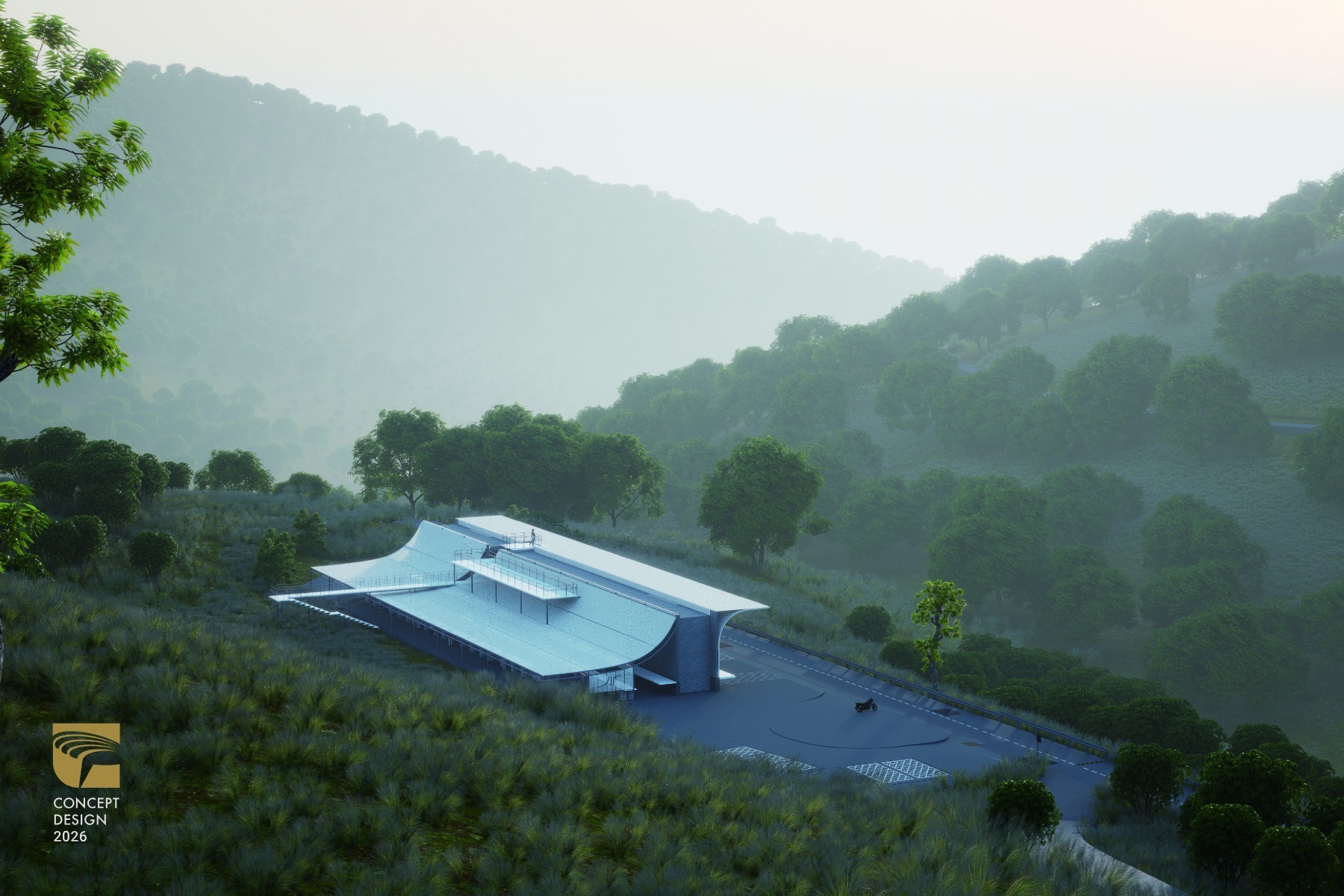
Addressing the seasonal idleness of mountain orchards and single-function agricultural markets in Chengdu, the project reinterprets the ancient post-station concept into a multifunctional public infrastructure for rural revitalization. The design employs a spatial logic of "logistics in front, market in back," transforming the loading zone into a functional showcase of rural labor while orienting market activities toward mountain vistas. Constructed with lightweight steel pipes and translucent membranes derived from local greenhouse techniques, the layered layout integrates freight distribution, exhibitions, and social spaces, offering a low-cost, adaptable model for regional development.
▌ Final Selection Jury’s Comments
During the Final Selection, Chang Han Ning, CEO of UID CREATE LTD., emphasized evaluating whether a designer proposes a "speculative and debatable future." He noted that for an innovative vision to be compelling, the concept must be supported by viable operational mechanisms or commercial potential.
Yuchang Liang, Principal of Architerior Architects, echoed this sentiment, stating that an exceptional concept design begins with posing a meaningful question and demonstrating the capacity to envision the future. He highlighted that the chosen issue need not be grandiose; the key lies in building upon solid research to deliver systematic solutions. Liang added that even if current conditions are not yet mature for immediate realization, proposals that offer visionary value and inspire future possibilities are precisely what the jury seeks to encourage.
Annual Judging Concludes; Award Ceremony Set for Late November
With the judging processes for the 2026 Golden Pin Design Award and Golden Pin Concept Design Award now officially complete, anticipation is building for the final results. The winners of the highest honor, the "Best Design of the Year," will be unveiled at the award ceremony in Taipei on Thursday, November 26. We invite the global design community and industry professionals to join this annual celebration, which bridges Taiwan’s creative energy with international innovative perspectives.
The complete list of finalists is available on the official website. For the latest updates on the ceremony and upcoming exhibitions, please stay tuned to the official website and social media platforms on Facebook, Instagram, and X.
■
Follow this link for the full list of the 2026 Best Design Award Finalists: https://www.goldenpin.org.tw/en/download/